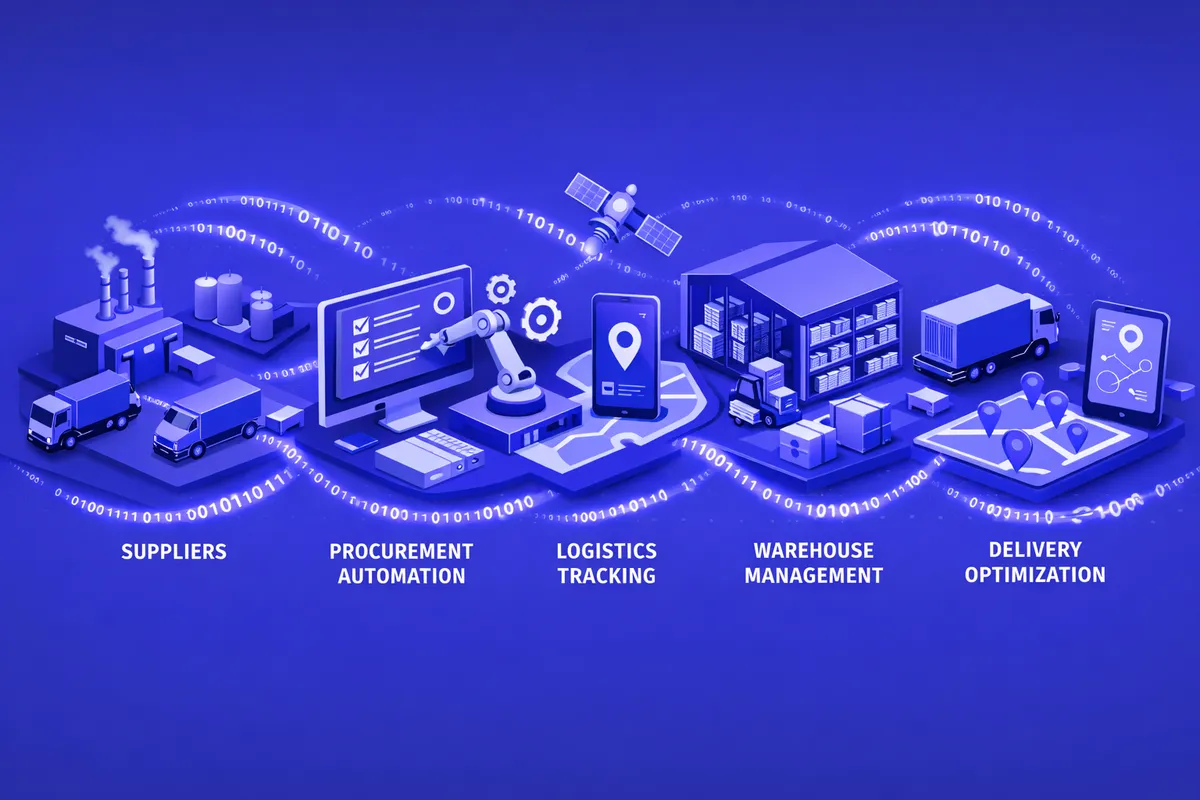
How We Build Supply Chain Automation for Albany Park
Albany Park supply chain automation starts with a vendor relationship inventory that respects the existing supplier network. The Korean and Middle Eastern food importers, the Chicago-area specialty distributors, and the regional produce suppliers serving Albany Park businesses are long-standing relationships built on trust and personal contact. Automation does not replace those relationships. It supports them by ensuring orders are placed accurately, deliveries are tracked systematically, and discrepancies are documented before they become disputes.
For import-dependent businesses on Lawrence Avenue, we focus first on the reorder management layer: the logic that determines when inventory of a specific item has dropped to the level that triggers an order, what quantity to order based on current demand and supplier lead time, and how to route the order to the correct supplier. This layer eliminates the most common failure mode in manual import procurement: running out of a specialty product because someone forgot to order it, or over-ordering a perishable because the demand estimate was wrong.
For businesses with multiple vendor relationships, we build a vendor management layer documenting each relationship: contracted pricing, lead times, minimum order quantities, and historical performance on accuracy and delivery. This documentation structures the procurement data so the automation layer can make ordering decisions and track performance over time.
Integration with accounting systems is a standard component of Albany Park supply chain automation, particularly for businesses that need to manage cash flow carefully. When a purchase order generates an expected payable in accounting, and when the received goods update the payable to reflect what was actually delivered, the accounts payable process reflects reality rather than a combination of paper receiving logs and purchase order estimates.
Industries We Serve in Albany Park
Korean grocery stores and specialty Asian food retailers along Lawrence Avenue and Kedzie Avenue manage import procurement for products that require advance ordering, cold chain coordination, and accurate receiving against complex manifests. Automated reorder management for refrigerated and frozen specialty imports, connected to the supplier relationships that Albany Park grocers maintain with Chicago-area Korean food distributors, eliminates the stockouts on key items that drive customers to competing stores while reducing the over-ordering of perishables that results in waste.
Middle Eastern bakeries and specialty food producers on Lawrence Avenue source specialty grains, dairy cultures, imported spices, and seasonal specialty ingredients from suppliers whose lead times and minimum orders require structured procurement planning. Automated ordering workflows that generate purchase orders based on current inventory levels and production schedules ensure that a zaatar bread operation never runs short on specialty flour because someone forgot to order it during a busy week.
Latino and Mexican taquerias and restaurants serving the corridor between Lawrence and Foster manage produce, protein, and specialty ingredient procurement from multiple vendors on daily and weekly schedules. Automated vendor communication for daily produce orders, with confirmation tracking and delivery discrepancy logging, gives a restaurant owner documentation of what was ordered, what was confirmed, and what was actually received, without requiring a manager to track every order manually.
Auto repair shops and small contractors along Montrose Avenue source parts and materials from multiple suppliers with varying lead times and availability. Automated parts procurement workflows that check supplier availability in real time and place orders with the fastest-available supplier for emergency repairs reduce vehicle turnaround time and the manual coordination burden on service writers who currently track parts orders through a combination of phone calls and memory.
Small medical practices and community health offices on Pulaski Road and Kedzie Avenue procure medical supplies, office materials, and clinical consumables from multiple vendors on recurring schedules. Automated supply procurement based on consumption tracking eliminates the manual reordering process and the supply stockouts that interrupt clinical operations when someone forgets to place an order before the last box of a critical supply is used.
Immigration law offices and professional services firms near the Albany Park Library and along Foster Avenue manage procurement for printed materials, office supplies, and professional services vendors. Automated procurement workflows with approval routing by dollar threshold replace the informal email approval chains that currently govern vendor spending and create gaps in purchase documentation that complicate expense reporting.
What to Expect Working With Us
1. Vendor and product inventory. We document every vendor relationship, every product category you procure, and the current ordering process for each. For Albany Park import businesses, this inventory often reveals that some vendor relationships are managed by one person who holds all the institutional knowledge about lead times, minimum orders, and seasonal availability. That knowledge becomes documentation the automation layer uses to run procurement consistently.
2. Demand pattern analysis. For food and grocery businesses on Lawrence Avenue, we analyze your sales data to build demand patterns by product, by day of week, and by season. Korean and Middle Eastern specialty products often have demand patterns tied to community calendars: Chuseok, Eid, Nowruz, and other observances create predictable demand spikes that a properly configured reorder system anticipates rather than reacts to after a stockout.
3. Procurement workflow build and vendor communication setup. We build the automated workflows for your priority vendor categories and configure vendor communication for the suppliers that support electronic ordering. For suppliers that do not support electronic ordering, we build the structured email or form process that standardizes the order regardless of how it is transmitted, so you have documentation even when the supplier is reached by phone.
4. Accounting integration and receivables reconciliation. We connect the procurement system to your accounting platform so purchase orders generate expected payables, received goods update those payables, and discrepancies between ordered and received quantities flag for review before payment is processed. For small Albany Park businesses managing cash flow carefully, this reconciliation layer prevents overpayments on short-shipped orders.