How We Build RAG Systems for Albany Park
Our process begins with understanding your critical documents. For an import business near the Kimball Brown Line terminus, that means supplier agreements, tariff documentation, product catalogs, customer orders, and shipping records. For a restaurant on Lawrence Avenue, it means menus, customer files, supplier contracts, and health certifications. For a medical practice near Horner Park, it means patient records, health certifications, insurance documentation, and clinical policies.
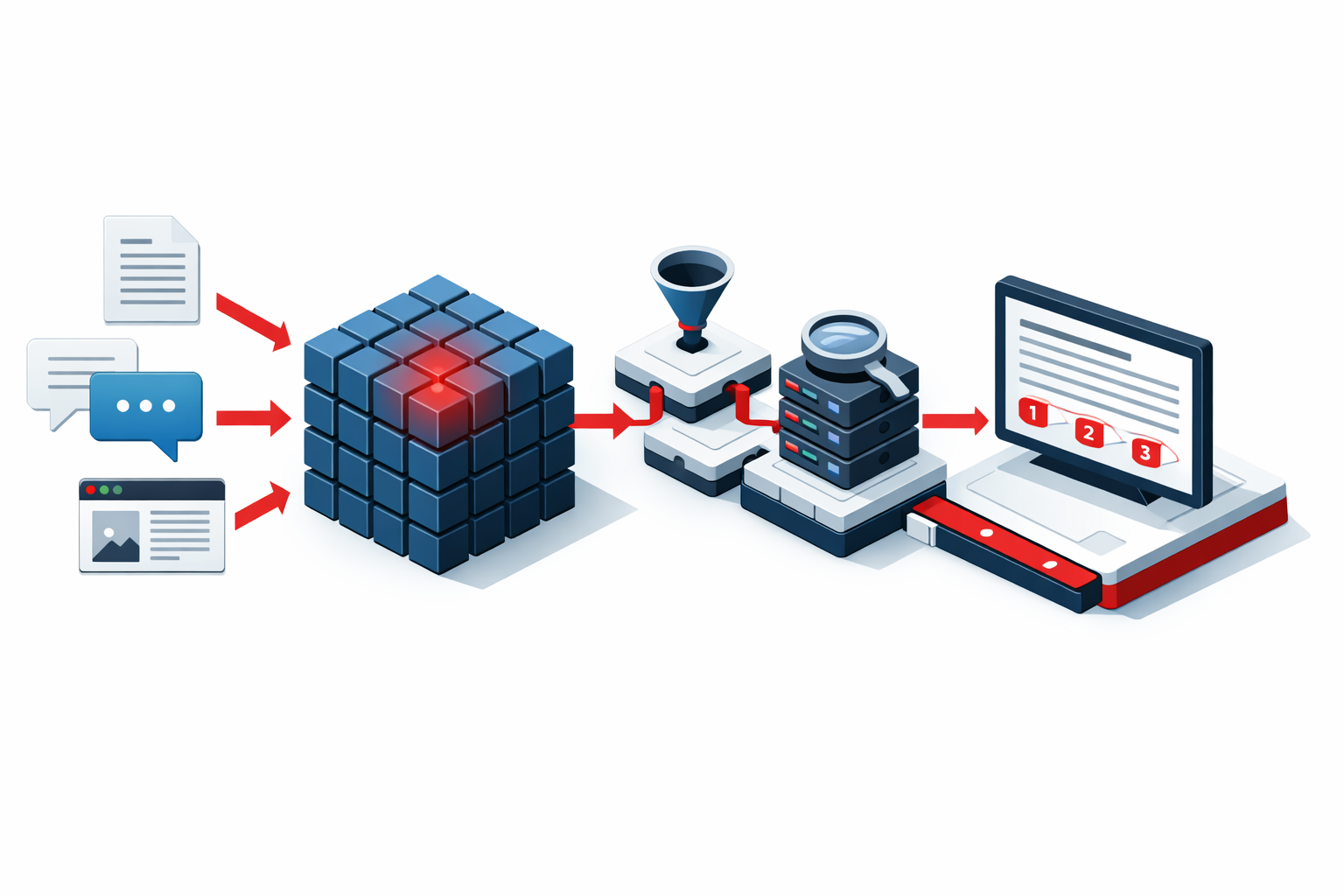
We organize these documents, index them for AI search, and build a RAG system that lets AI answer questions using your actual documents. We support multilingual indexing so documents in Korean, Arabic, or Spanish are searchable alongside English documents. The indexing process also handles documents in mixed formats: PDFs, scanned images, Word documents, spreadsheets, and email archives can all be indexed.
We configure the RAG system with your specific business vocabulary. A Korean grocery has specific product categories, supplier names, and regulatory terms. An immigration law practice has specific legal terminology and case codes. We train the system on your vocabulary so answers are accurate and specific to your business context.
We then build query interfaces your team can actually use. Employees ask questions in plain language. The RAG system searches all indexed documents and returns specific answers with citations showing which document and which section the answer came from. Staff can verify answers by reviewing the source document. Accuracy is verifiable, not just claimed.
We integrate RAG with your existing workflows. For an immigration attorney on Kedzie Avenue, the RAG system might integrate with case management software so attorneys can search client files directly from their workflow. For a restaurant on Foster Avenue, the system might integrate with point-of-sale so staff can query customer dietary restrictions at the moment of service.
Industries We Serve in Albany Park
Import and export businesses use RAG to search supplier contracts, tariff documentation, product catalogs, and customer orders. Questions like "What are the payment terms with this supplier?" are answered instantly from contracts. Import business owners on Pulaski Road and Montrose Avenue manage supplier relationships across multiple countries and languages. RAG lets them search all documentation in any language from one interface.
Restaurants and food businesses use RAG to search menus, customer files, supplier contracts, and health certifications. Staff can confirm customer dietary restrictions, supplier ingredient sourcing, and menu details quickly. For Albany Park restaurants on Lawrence Avenue and Foster Avenue serving multilingual communities, this matters especially for allergy and dietary restriction management across language barriers.
Medical practices and health clinics use RAG to search patient records, health certifications, and clinical policies. Doctors and nurses near Ronan Park and Horner Park can confirm patient history, allergy information, and past treatments without searching through paper files or multiple software systems.
Immigration services and legal practices use RAG to search case files, documentation requirements, regulatory changes, and client correspondence. Attorneys on Kedzie Avenue can quickly access client history and regulatory updates across the multiple languages their clients speak.
Auto repair and service businesses use RAG to search customer service history, parts catalogs, warranty information, and repair estimates. Mechanics on Pulaski Road can quickly find customer history and parts specifications without relying on memory or inefficient manual file searches.
Small manufacturers use RAG to search production documentation, supplier specifications, quality certifications, and order history. Production managers can access current specifications and quality standards without hunting through filing systems.
What to Expect Working With Us
1. Document audit and organization. We identify your critical documents and organize them for indexing. We assess what formats your documents are in and what languages are present. We establish document categories and access controls. This takes one to two weeks.
2. RAG system build. We index documents, build search infrastructure, configure multilingual support, and calibrate the system for your business vocabulary. We test with real questions your team would actually ask. This takes three to four weeks.
3. Integration and testing. We integrate RAG with your actual workflows and test with real business questions. We refine the system based on accuracy testing with questions that matter to your business. We verify that multilingual search works correctly across all languages in your document archive.
4. Team training. Your team learns to ask questions and interpret AI answers from your documents. We train staff on how to verify answers by checking source citations. We establish best practices for multilingual query formatting.
5. Continuous improvement. As new documents are added, we update the system. We monitor query patterns to identify gaps in the document archive. We refine the system as your business evolves and your document archive grows.