How We Build POS Systems for Albany Park
Albany Park implementations begin with a multilingual configuration audit. We document the languages in which the business operates: the language of the owner, the language of staff, and the primary languages of the customer base. Configuration decisions flow from that audit. A Korean grocery on Kimball Avenue with Korean-speaking staff and a customer base that includes both Korean-speaking and Spanish-speaking regulars needs a different language configuration than a Middle Eastern bakery near Albany Park Library where the owner and staff work in Arabic and the customer base includes both Arabic-speaking community members and English-speaking newer residents.
Payment method configuration for Albany Park operations includes EMV chip, contactless NFC for Apple Pay and Google Pay, and an evaluation of whether additional payment platforms are warranted based on the specific customer mix. For Korean businesses near the Kimball Brown Line terminus serving Korean American customers, Samsung Pay acceptance may be relevant. For businesses serving recent arrivals from countries where specific mobile payment platforms are dominant, we evaluate adding those platforms through the payment processor's alternative payment network.
For specialty food retailers and importers, inventory architecture precedes menu configuration. We build the inventory structure with the unit-of-measure definitions, vendor catalog, and category taxonomy that reflects the actual product mix before entering individual items. Korean grocery inventory architecture is different from Middle Eastern bakery inventory architecture: different product categories, different unit-of-measure conventions, different supplier relationships. We build each implementation to match the actual business.
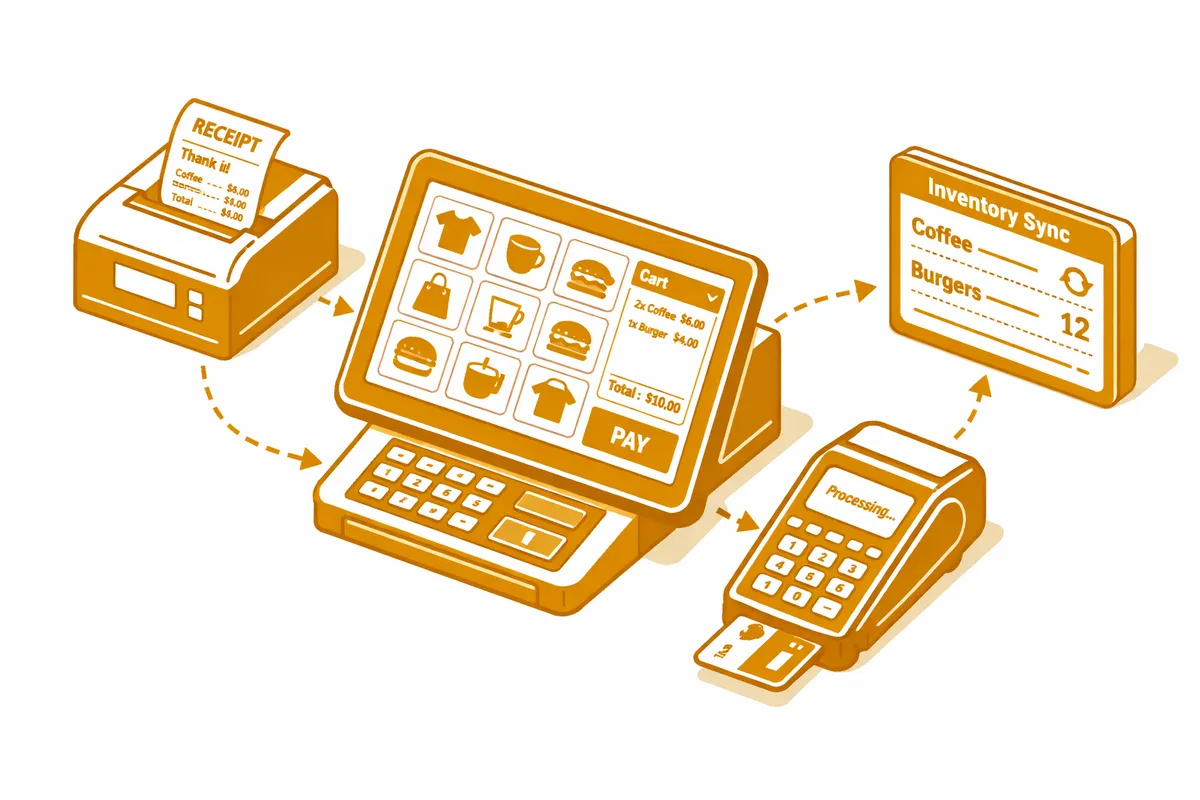
Multi-language receipt printing is a specific configuration request from some Albany Park operators whose customers prefer receipts in their language. Where supported by the platform, we configure language-specific receipt templates that can be assigned by customer preference or by transaction type.
Industries We Serve in Albany Park
Korean groceries and specialty food retailers on Lawrence Avenue near Kimball Brown Line operate with complex inventory profiles that mix produce, packaged specialty goods, refrigerated items, and sometimes prepared food. We configure these businesses with weight-based pricing connected to scale hardware for produce and bulk items, SKU-level tracking for packaged specialty imports, and the vendor catalog that manages the Korean specialty distributors who supply the business. Inventory alerts trigger at item-specific reorder points so that the owner gets a low-stock notice on the specialty gochujang brand before it sells out, not after.
Middle Eastern bakeries and specialty food businesses near Eugene Field Park and Ronan Park handle freshly baked goods with same-day sell-through dynamics, specialty packaged imports, and catering orders for community events. We configure these businesses with the production batch tracking that connects raw ingredient inventory to finished baked goods output, the prepared-food close-of-day workflow that writes off unsold baked goods to waste, and the catering order management that handles deposit collection and order fulfillment for community event catering.
Latino taquerias and quick-service restaurants toward Pulaski Road on Lawrence Avenue serve a neighborhood customer base with a high proportion of cash transactions and a menu that rewards quick-service speed. We configure these operations for fast transaction throughput: front-of-mind shortcuts for the highest-frequency items, cash drawer management that handles the close efficiently, and the simple daily sales report that tells the owner what sold and what the day's revenue was without requiring accounting software.
Immigration attorneys and professional services near Albany Park Library on Kimball Avenue that collect fees at the front desk need professional-grade payment processing with the paper trail that legal service billing requires. We configure these practices with the receipt archiving, transaction documentation, and payment plan tracking that professional services billing demands. For attorneys handling immigration consultations at a fixed fee with installment options, the payment plan workflow tracks outstanding balances against individual client accounts.
Auto repair and neighborhood service businesses near the Kedzie Avenue commercial stretch manage parts inventory, service order billing, and customer notification from a workflow that benefits from POS integration. Parts inventory tracks against vehicle-specific service orders, and the customer text notification workflow alerts the customer when their vehicle is ready without requiring a manual phone call from the service writer.
Halal butcher shops and specialty meat retailers on Lawrence Avenue sell weight-priced fresh meat, specialty cuts on request, and sometimes prepared halal food items alongside the fresh counter. We configure these operations with scale integration for weight-based meat pricing, the specialty cut-to-order workflow that accepts a customer request and tracks it through the cutting process to the transaction, and the inventory management that tracks whole animal and primal cut inventory against retail and cut-to-order sales.
What to Expect Working With Us
1. Multilingual configuration as the default. We do not offer multilingual POS as an add-on after the English configuration is complete. Language requirements are addressed at the system design phase, and the language configuration is tested throughout the implementation before it goes live. Every language your staff and customers work in is reflected in the system design.
2. Payment method breadth. We evaluate payment method requirements based on the specific customer community your business serves, not based on the US standard card acceptance assumption. Where additional payment platforms are warranted, we configure them as part of the initial implementation.
3. Specialty inventory structure. For grocers, bakeries, butchers, and specialty food retailers on Lawrence Avenue, inventory architecture is built before individual items are entered. The structure reflects your actual product mix, supplier relationships, and pricing methods so that inventory management produces accurate data rather than requiring manual correction.
4. Community-oriented training. Training happens in the language the operator works in. For Albany Park businesses, that frequently means Korean or Arabic or Spanish. We conduct training in the operator's working language and provide documentation in that language rather than requiring translation from English-language materials.