How We Build Legacy System Integrations for Albany Park
Every legacy integration project starts with a data archaeology phase. We document what the legacy system actually contains, in what format, with what structure, and with what accuracy. This phase consistently reveals surprises: fields that were defined one way in 2009 and used differently by 2015, records with inconsistent encoding, data that was entered during a transition period that does not match the current schema, and tables that are referenced by the application but have not been populated in years.
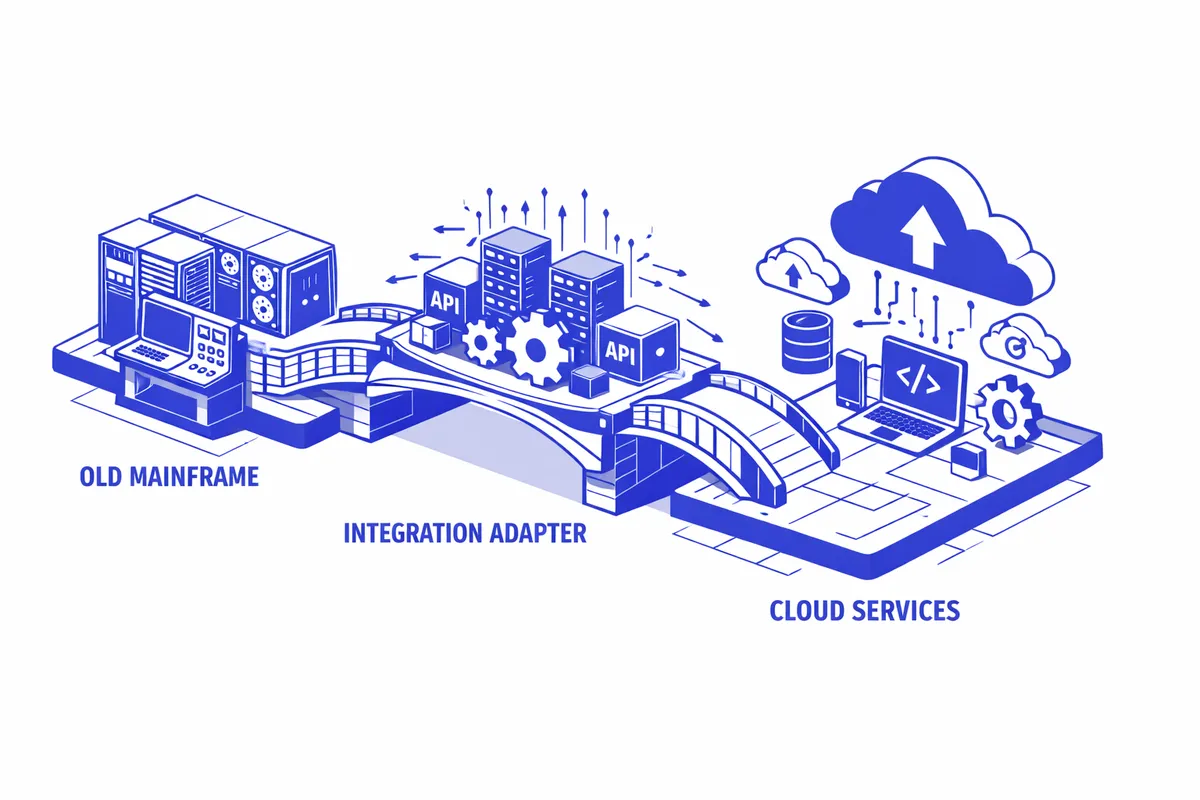
We then establish the integration strategy. For systems that export data in standard formats, the approach is direct: scheduled exports, transformation, and import into the modern platform. For systems with no export capability, we build a database reader that accesses the underlying data storage, whether that is a proprietary database, a flat file, or a legacy SQL schema, and extracts records in a form the modern system can consume.
The transformation layer is where most of the complexity lives. Legacy systems from the mid-2000s routinely have character encoding inconsistencies that cause problems when records contain Korean, Arabic, or Spanish characters. Address fields have been filled in inconsistently over years of data entry by different staff members. Date formats vary. We build transformation rules that normalize the data before it enters the modern system, correcting the structural inconsistencies without discarding the content.
For Albany Park businesses where the legacy system cannot be switched off entirely because it remains the system of record for certain functions, we build bidirectional synchronization. New records created in the modern platform flow back to the legacy system. Updates made in either system propagate to the other within a defined window. This keeps both systems current during a transition period and allows the business to wind down the legacy platform on its own timeline rather than on an arbitrary cutover date.
Industries We Serve in Albany Park
Immigration law firms near Pulaski Road running case management platforms from the 2000s hold irreplaceable client records in systems that have no modern API. Legacy integration connects these databases to current practice management tools, making historical case records searchable, connecting old client records to new intake forms, and allowing the firm to move to a supported platform without losing the documentation history that clients and regulatory compliance require.
The Korean specialty grocers and food importers on Lawrence Avenue who have been using the same inventory and POS systems since their founding carry product history, supplier records, and pricing data that represents years of operational knowledge. Integration connects that historical data to modern e-commerce platforms and inventory management tools so the transition to online ordering or wholesale portals does not start from a blank database.
Community health clinics near Horner Park that run legacy electronic medical record systems face a specific challenge: the clinical records in those systems have regulatory retention requirements that make deletion impossible, but the platforms that hold them may no longer receive security updates or technical support. Integration creates a read-accessible archive layer that keeps records available for retrieval while allowing clinical operations to move to a supported platform for new patient records.
Auto repair shops near Ronan Park accumulate vehicle service histories in legacy shop management systems that span years of customer relationships. A customer who returns after three years of ownership should be greeted with their complete service history, not a blank record because the new management system was not migrated from the old one. Integration transfers historical vehicle and customer records into the current platform before any data is lost to system retirement.
Legal services and document preparation firms along Kedzie Avenue have client document archives in legacy file management systems with custom folder structures built over years of organizational evolution. Integration maps those legacy folder structures to modern document management platforms while preserving the file naming conventions and organizational logic that staff rely on to find records quickly.
Small medical practices near Eugene Field Park dependent on legacy billing systems tied to specific insurance payer connections need those billing relationships to survive a modernization. Integration extracts the historical billing data, migrates the payer configurations, and connects the legacy billing records to the new platform so the revenue cycle is not disrupted during a system transition.
What to Expect Working With Us
1. Legacy system archaeology. Before proposing an integration architecture, we spend time inside the legacy system documenting what it actually contains and how its data is structured. This phase typically takes one to two weeks and consistently surfaces issues that change the integration strategy. Skipping it leads to integration designs that fail against edge cases no one anticipated during planning.
2. Integration architecture and risk assessment. We deliver a document that describes the integration approach, the expected data quality issues and how we will handle them, the synchronization logic, and the failure modes we have designed against. For Albany Park businesses near Kimball Avenue that have experienced data problems from previous technology projects, this document provides the assurance of specificity before any code is written.
3. Staged migration and parallel operation. We never cut over from a legacy system to a new integration in a single event. Migration happens in stages: historical records first, then active records, then real-time synchronization. During the transition, both systems operate and are reconciled to ensure data consistency. For a business that cannot afford even one day of operational disruption, this staged approach is the only acceptable risk profile.
4. Validation, documentation, and handoff. After integration is complete and stable, we deliver technical documentation that describes how the integration works, what monitoring is in place, and what to do if the connection breaks. For businesses that will eventually work with different developers or IT support, this documentation ensures the integration can be maintained without us.