How We Build Inventory Management Systems for Albany Park
We start by mapping the supplier relationships and product characteristics of your Albany Park operation. For a Korean grocery importer, this means cataloging every supplier, their lead times, minimum order quantities, and product categories, and designing reorder logic that fits each supplier's constraints independently. For a bakery, it means mapping which ingredient categories are ordered by weight and quantity for production use versus which are tracked as finished goods inventory, and designing a system that handles both.
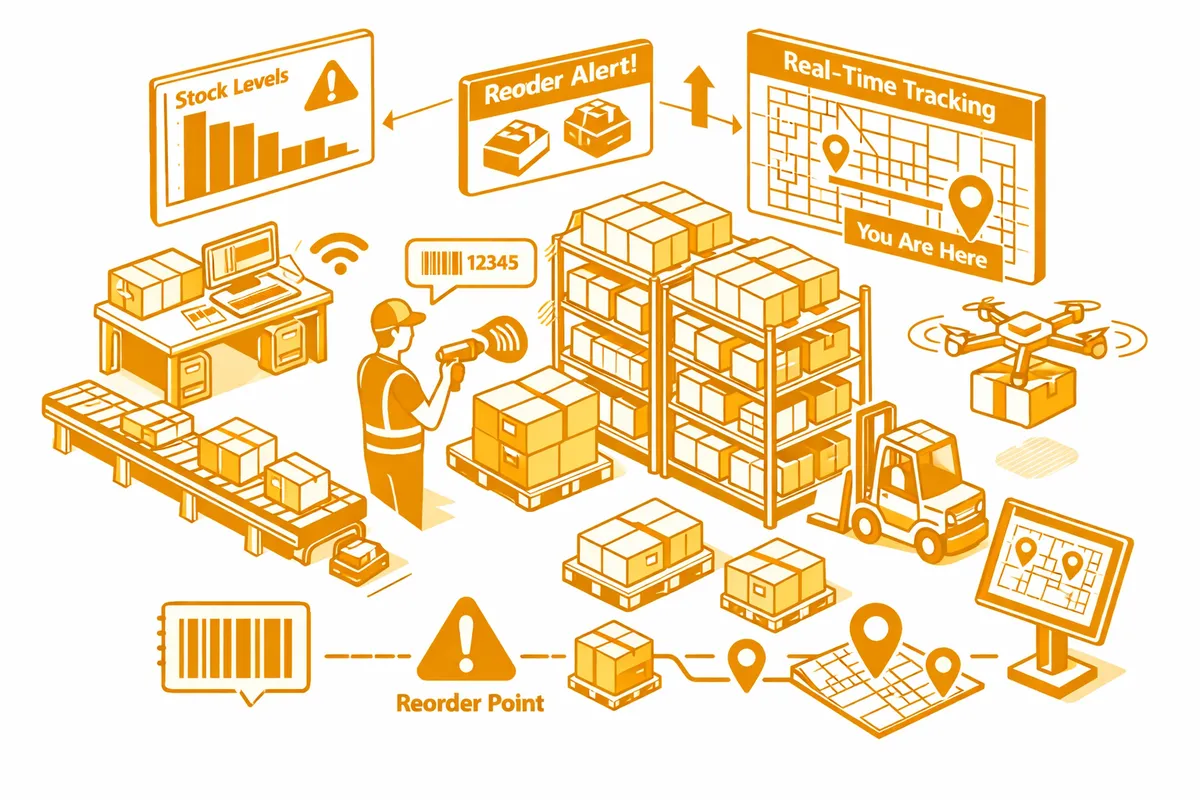
Multi-supplier reorder logic is the operational core of Albany Park food retail inventory. We build reorder rules that are specific to each supplier relationship: the international importer gets purchase orders generated based on four-week forward demand and supplier lead time; the local produce wholesaler gets reorder triggers based on three-day demand with same-week delivery; the domestic specialty food distributor gets weekly consolidated orders based on sell-through rates. The system generates purchase orders timed appropriately for each supplier without requiring manual calculation for each order cycle.
Perishable tracking adds FIFO enforcement, expiration date recording, and spoilage logging to the inventory record. When a product batch is received, it is dated. The picking and shelving workflow shows staff which batch to use first. Spoilage events are logged against their receiving batch, so the system accumulates data on which products spoil fastest and what order quantities minimize spoilage without creating stockouts. This data, built over months of operation, produces a reorder model that is genuinely tuned to Lawrence Avenue's specific demand patterns.
For Albany Park businesses with online ordering or online availability displays, we connect the inventory system to those channels so displayed availability is current rather than static, eliminating the gap between what the website shows and what is actually on the shelf.
Industries We Serve in Albany Park
Korean groceries and Asian food import retailers near Kimball Avenue and Lawrence Avenue manage complex international and domestic supplier mix, imported specialty items with variable lead times, and perishable produce with high daily turnover. We build inventory systems with multi-supplier reorder logic, expiration date tracking, and online availability integration calibrated to the specific product mix each store carries.
Middle Eastern bakeries and specialty food producers along Lawrence Avenue near Eugene Field Park bake to order and to stock, managing ingredient inventory across daily retail and catering orders that arrive on short notice. We build systems connecting ingredient inventory to production planning so catering commitments never oversell available ingredient capacity.
Latin taquerias and Mexican grocers on Lawrence Avenue near Pulaski Road manage perishable ingredient inventory, prepared food sales, and specialty grocery items. We build daily-use ingredient tracking with prep-waste logging and retail inventory with FIFO enforcement and spoilage monitoring.
Halal butchers and specialty protein retailers on Kedzie Avenue manage purchasing cycle inventory, daily-cut product, and specialty items ordered to customer request. We build inventory systems handling the specific receiving, cutting, and sell-by date tracking requirements of specialty protein retail.
Immigration attorney and professional service offices near Albany Park Library serve as anchor businesses along the Lawrence Avenue corridor and often sell document services and notary products as a secondary business. We build lightweight product inventory for professional service businesses that have a small physical goods component alongside their core services.
Auto repair shops and contractors near Montrose Avenue on the edges of the Albany Park business district manage parts inventory and consumable supplies. We build parts inventory systems with reorder automation, vendor management, and cost tracking that connects parts usage to job costing.
What to Expect Working With Us
1. Supplier and product mapping. We catalog your full supplier relationship set, product catalog, and demand patterns before designing anything. For Albany Park's multiethnic food businesses, this mapping work is where the complexity lives, and getting it right is what makes the system work.
2. System design for your specific mix. We design multi-supplier reorder logic, perishable tracking, and channel integrations appropriate to your specific operation. No generic templates applied to a market that is anything but generic.
3. Build, integrate, and migrate. We implement the system, integrate with your POS, online ordering platform, and accounting software, and migrate your product catalog and historical demand data with careful validation.
4. Launch and operational tuning. We stay with your team through the first weeks after launch, adjusting reorder logic as real demand data accumulates and addressing any issues that emerge from live operation. Ongoing maintenance retainers available for system evolution.