How We Build Field Service Management for Albany Park
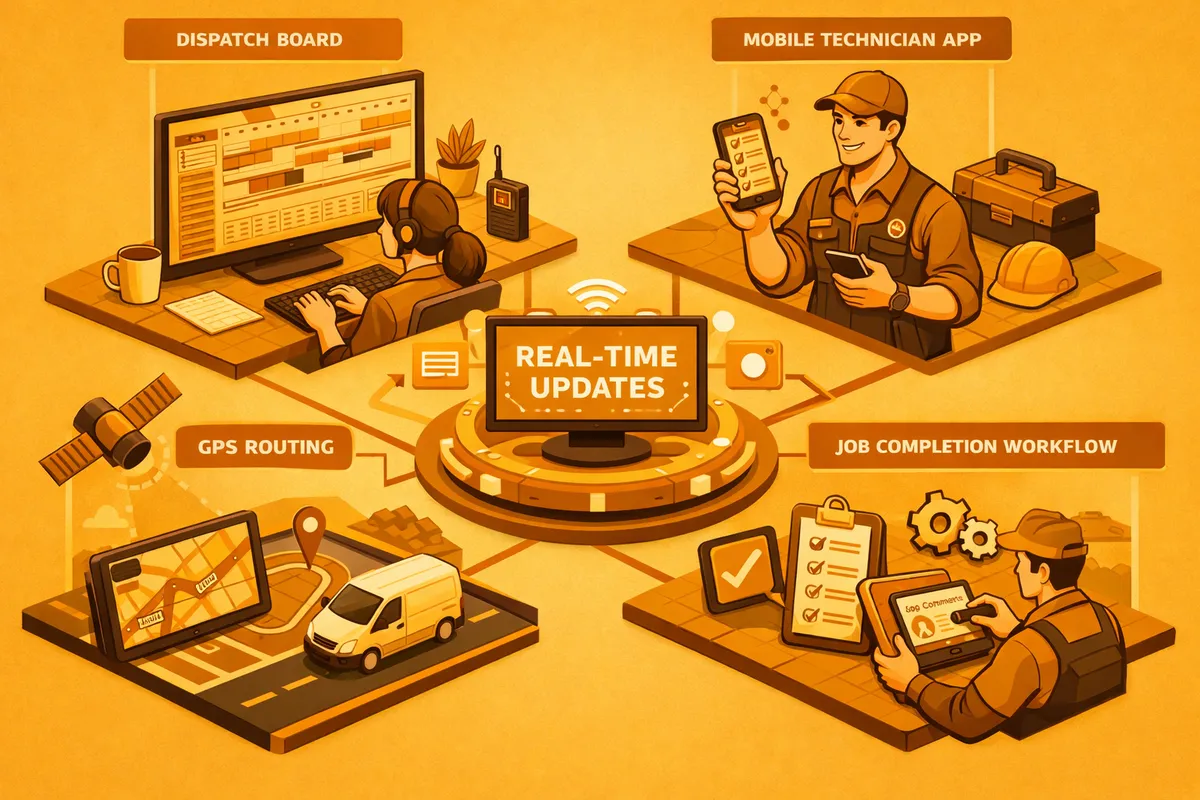
We design FSM systems that fit the operational reality of Albany Park's small and family-owned service businesses. That means interfaces that do not require a full-time dispatcher to operate, mobile tools that technicians can use effectively regardless of native language, and customer communication that accommodates the neighborhood's multilingual character.
Lawrence Avenue, Kedzie Avenue, Foster Avenue, Pulaski Road, and Montrose Avenue form the geographic boundaries we configure routing around. The Kimball Brown Line terminus creates predictable pedestrian and transit traffic patterns at the Kimball and Lawrence intersection that affect morning dispatch on the eastern edge of the service territory. We account for these patterns in routing rather than using average speed assumptions.
For Albany Park contractors managing a mix of residential and commercial accounts, we build dispatch workflows that handle the distinct scheduling logic of each. Commercial clients along Lawrence Avenue often need service outside business hours. Residential customers in the apartment corridors near Kedzie Avenue have access and scheduling constraints specific to multi-unit buildings. Work order templates capture these distinctions so technicians arrive prepared for the specific requirements of each job type.
Accounting integration reduces the data re-entry burden that falls hardest on small operators running without a full office staff. When a technician completes a job, the system creates an invoice and updates inventory records automatically. For a two-person service business where the owner is also the dispatcher and sometimes the accountant, eliminating manual data transfer between job completion and billing is a material time saving.
Industries We Serve in Albany Park
HVAC and Plumbing Contractors: The apartment buildings and two-flats on the residential blocks between Lawrence Avenue and Foster Avenue create concentrated HVAC and plumbing demand. Contractors serving this inventory need work order systems that capture building-specific mechanical configurations, access protocols for multi-unit buildings near Kimball Brown Line, and route optimization that minimizes drive time across the dense residential grid.
Auto Service and Repair: Auto service shops along Kedzie Avenue and the Lawrence Avenue corridor represent a mobile service category where field service management applies to mobile detailing, mobile tire service, and on-site fleet maintenance operations. These businesses need scheduling tools that coordinate multiple vehicles and technicians across a service territory that extends beyond Albany Park into adjacent neighborhoods.
Commercial Cleaning Services: The Lawrence Avenue commercial strip, including the grocery stores, restaurants, and retail storefronts that extend through the commercial core, generates sustained demand for commercial cleaning. Cleaning businesses working this corridor need route-optimized scheduling, crew management tools, and customer communication that handles the multilingual character of their client base.
Property Maintenance Contractors: Albany Park's rental housing inventory, including the multi-unit buildings along Kedzie Avenue and the two-flat corridors near Ronan Park, creates ongoing work for property maintenance contractors. These businesses need work order management by building and unit, maintenance request tracking, and preventive maintenance scheduling for older building systems.
Landscaping and Exterior Maintenance: The residential blocks near Horner Park and Eugene Field Park contain owner-occupied and rental properties with lawn and exterior maintenance needs. Landscaping contractors serving this territory benefit from recurring schedule management, seasonal route planning, and customer communication tools that reach a multilingual homeowner and landlord base.
Small Appliance and Equipment Repair: Albany Park's dense residential population and the small businesses along Lawrence Avenue generate demand for appliance repair, commercial equipment maintenance, and small-scale facility repair. Service businesses in this category need scheduling tools that handle high job volume efficiently and customer communication that sets accurate service windows.
What to Expect Working With Us
1. Operational Assessment: We start by understanding how your Albany Park service business schedules and dispatches jobs today. That means learning your current tools, your job volume, your customer mix, and the specific operational problems that are costing you time or money. For small family-run operations in Albany Park, we take the time to understand the informal systems that work alongside the official process, because the best FSM implementation preserves what works and improves what does not.
2. Territory and Workflow Design: We design your system around Lawrence Avenue, Kedzie Avenue, Foster Avenue, and the Albany Park service territory. Dispatch workflows reflect the specific mix of residential, commercial, and multi-unit work your business handles. Customer communication is configured for your customer base, including multilingual notification support where needed. For businesses with commercial accounts on the Lawrence Avenue corridor, we build scheduling logic that handles after-hours service windows.
3. Technician Training and Field Testing: We run live Albany Park jobs through the mobile application before full launch. Technicians test the navigation, the job completion workflow, and the offline functionality. We train in both English and Spanish where your workforce requires it. Dispatcher training covers the full dispatch interface, reporting views, and the processes for adding customers, creating work orders, and managing emergencies.
4. Phased Rollout and Support: We launch in phases, starting with the features that deliver the most immediate value. For most Albany Park contractors, that means scheduling, dispatch, mobile app, and customer communication first, with inventory management and advanced reporting added in subsequent phases. We provide hands-on support during the first weeks of live operation and remain available as your job volume grows and your team expands.