How We Build Document Management Systems for Albany Park
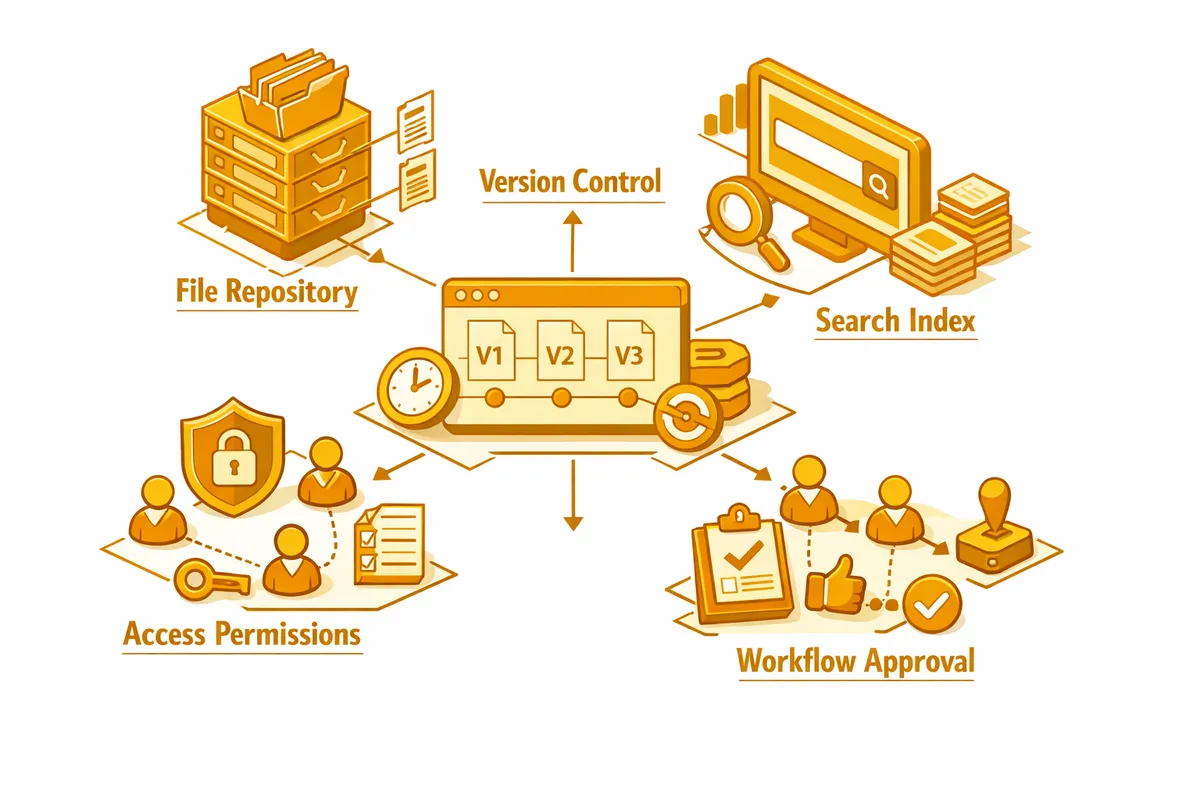
Document management implementation for an Albany Park business begins with a document audit covering every type of record the business creates and receives, where those records currently live, who accesses them, and what regulations govern their storage and retention. For an immigration law office on Kedzie Avenue, that audit surfaces case files, government correspondence, USCIS notices, and client agreements stored across physical cabinets and digital folders with no consistent naming convention. For a medical practice near Albany Park Library, it reveals clinical records, billing documents, and intake forms stored in locations and formats that do not meet HIPAA access control requirements.
From the audit, we design a document taxonomy specific to the business type. For an immigration attorney, the taxonomy is built around clients and matter types, with document categories that match the actual record types an immigration practice manages: applications, supporting documentation, government correspondence, court records, approvals, and denials. For a Korean grocery on Lawrence Avenue, it is built around operational categories: vendor contracts, licensing and inspection records, employee records, and insurance documentation. The taxonomy reflects how the business actually works.
Access controls follow the taxonomy. In a medical practice, clinical records are accessible to clinical staff only. In a law office, client documents in one matter are accessible to the attorneys working on that matter. In a retail or food business on Lawrence Avenue, licensing and inspection records are accessible to managers while employee records are restricted to the owner. We implement these controls technically, not through policy memos that depend on staff compliance.
Migration is part of every implementation. Albany Park businesses often have years of documents stored in physical files, consumer cloud accounts, and email threads. We catalog, digitize where needed, and migrate those records into the new system with consistent metadata applied during the migration, so the new system starts with organized, findable documents rather than inheriting the disorder of the previous environment.
Industries We Serve in Albany Park
Immigration law practices on Kedzie Avenue and Lawrence Avenue handle some of the most document-intensive professional work in the neighborhood. We build matter-centric document management with client and case organization, version control for applications and supporting documents, and rapid retrieval that lets an immigration attorney locate any document in any client file in seconds during time-sensitive proceedings.
Small medical practices near Horner Park, Eugene Field Park, and Albany Park Library serving Albany Park's Korean, Middle Eastern, and Latino patient populations need HIPAA-compliant document management with patient-centric organization, access controls limiting record visibility to authorized clinical staff, complete audit logs, and retention policy enforcement for clinical records under Illinois and federal requirements.
Korean groceries and import businesses on Lawrence Avenue manage supplier contracts, import documentation, state and city licensing, and inspection records that grow in volume and complexity as the business matures. We build operational document systems that centralize these records, make them searchable by vendor, document type, or date, and ensure compliance documentation is findable when an inspector arrives.
Middle Eastern bakeries and food businesses on Kimball Avenue and Montrose Avenue manage health department licenses, food handler certifications, employee records, and vendor agreements. A document management system built for food service keeps licensing and inspection documentation accessible and tracks certification expiration dates so records are organized before inspections occur.
Latino taquerias and family restaurants along the Lawrence Avenue corridor benefit from centralized document management for vendor contracts, equipment leases, licensing records, and employment documentation, organized in a system that does not require the owner to remember where every document is filed.
Auto repair shops on Pulaski Road and Kedzie Avenue manage customer records, parts supplier agreements, warranty documentation, and regulatory compliance records. A document system organized by customer, job type, and supplier eliminates the paper accumulation that characterizes high-volume auto service operations.
What to Expect Working With Us
1. Discovery and document audit. We catalog every document type your Albany Park business creates and receives, survey all storage locations including physical files and consumer cloud accounts, identify compliance requirements specific to your business type, and document access patterns to design accurate access controls.
2. Taxonomy and architecture design. We design the document classification structure, metadata schema, and access control model specific to your business. Immigration law practices, medical offices, retail operations, and food businesses each receive a taxonomy built around their actual document workflows, not a generic template.
3. Implementation, digitization, and migration. We build the system, digitize physical records where needed, and migrate existing digital documents into the new structure with consistent metadata applied during the migration. Core implementations serving your most critical document types are live within eight to fourteen weeks.
4. Training and ongoing support. Post-launch training for your Albany Park team, with support for multilingual staff environments. Adoption monitoring and a warranty period. Optional maintenance retainers for taxonomy updates and policy changes as your business grows.