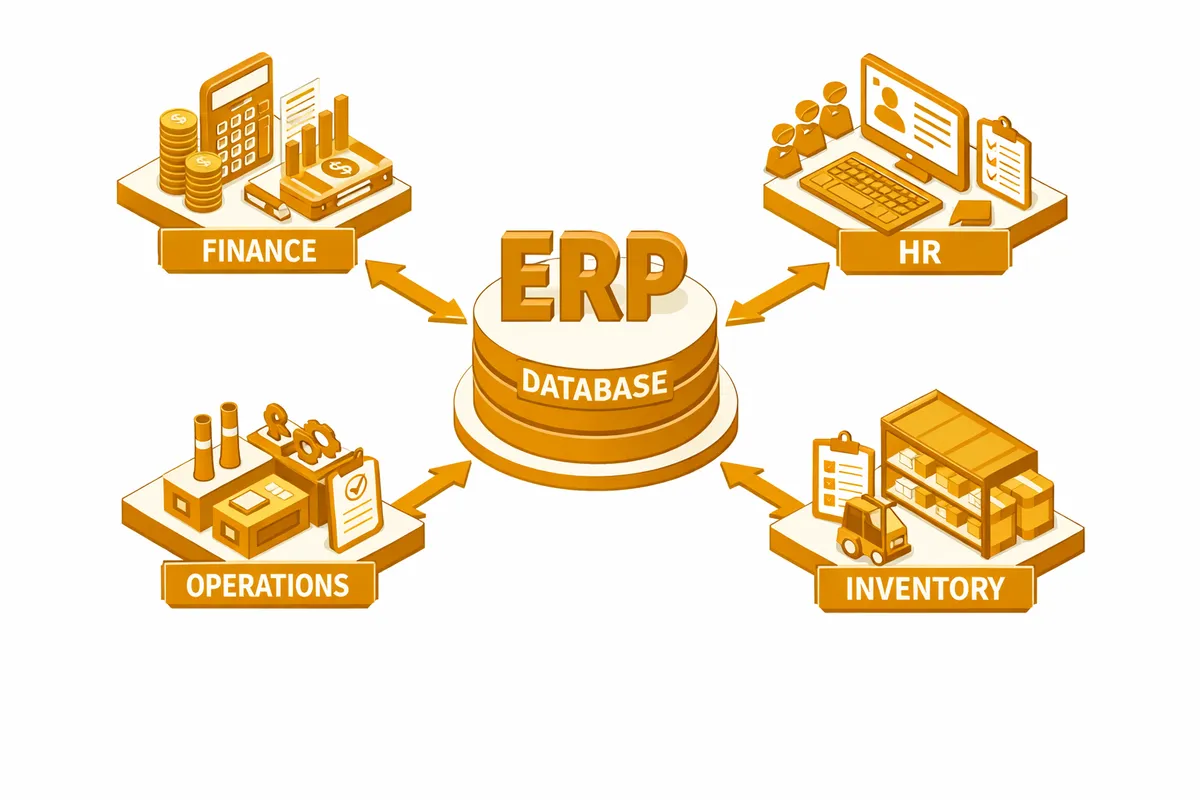
How We Build Custom ERP for Albany Park
Every engagement begins with two to three weeks of structured discovery. We conduct workshops and interviews with ownership, operations, and key staff in whatever language combination the business uses internally. For Albany Park's multilingual businesses, this means the discovery process itself adapts to how the business actually communicates, not to how an outside consultant prefers to work.
From discovery, we design the module structure, data model, integration architecture, and phased delivery plan. For a Korean grocery with prepared foods and catering, the module structure might include retail inventory management, prepared food production tracking, catering contract and event management, and consolidated financial reporting. For a wholesale bakery, it might include production scheduling, ingredient purchasing and cost tracking, wholesale order management, retail point-of-sale integration, and delivery logistics.
Implementation is phased, delivering highest-impact modules first. Your team has working, valuable software within fourteen to twenty weeks. Subsequent phases add capabilities without disrupting what is already running.
Industries We Serve in Albany Park
Korean groceries and specialty food retailers that have grown beyond retail-only operations need ERP that integrates prepared food production, wholesale supply, retail management, and catering in a single operational system. The groceries along Lawrence Avenue near the Kimball Brown Line terminus that have expanded into prepared foods and community catering need operational infrastructure that standard grocery software does not provide.
Middle Eastern and South Asian bakeries and food producers that supply wholesale to restaurants across the North Side in addition to serving retail customers need ERP that integrates production scheduling, ingredient purchasing, retail operations, and wholesale order management. The production and distribution complexity of a bakery at wholesale scale exceeds what standard POS or restaurant software was designed to handle.
Latino taquerias and family restaurants that have added catering, meal prep subscriptions, or a second location need ERP that consolidates all revenue lines in a single operational view. The family restaurants near Horner Park that have grown beyond their original single-location model need management-level visibility that individual restaurant POS platforms cannot provide.
Immigration attorneys and legal service practices serving Albany Park's multilingual community need practice management software built around the specific requirements of high-volume immigration practices. Case management, multilingual client communication, document assembly, deadline tracking, and the fee structures specific to immigration work require a system designed for this practice type rather than adapted from a general legal practice management platform.
Small medical and dental practices that have grown to multi-provider operations near Eugene Field Park need practice management integration with business-level financial reporting. Standard practice management software handles scheduling and billing at the individual provider level; a custom ERP integrates those systems with the business-level management reporting a growing multi-provider practice requires.
Auto repair and general contractors serving both retail customers and commercial accounts along Pulaski Road need ERP that handles different billing models in a unified system. A contractor managing residential repairs for individual homeowners and maintenance contracts for property managers along Kedzie Avenue needs job costing, customer relationship management, and billing that handles both account types without requiring separate platforms.
What to Expect Working With Us
1. Discovery. Two to three weeks of structured workshops and interviews mapping your operations across every function, conducted in whatever language combination serves the business. For Albany Park's multilingual businesses, this means adapting the discovery process to how the business actually communicates internally.
2. Strategy and architecture. We design the module structure, data model, integration architecture, and phased delivery plan. You review and approve before development begins.
3. Implementation. Phased delivery with highest-impact modules live within fourteen to twenty weeks. Subsequent phases add capabilities without disrupting what is already running.
4. Results and ongoing support. Post-launch monitoring, operational validation, and a warranty period. Optional maintenance retainers for ongoing operational evolution.