How We Build Computer Vision for Albany Park
Our process begins by identifying what visual analysis problems the business wants to solve. An auto shop wants computer vision to help diagnose engine problems from photos. A grocer wants computer vision to verify produce quality. A restaurant wants computer vision to automate delivery receiving.
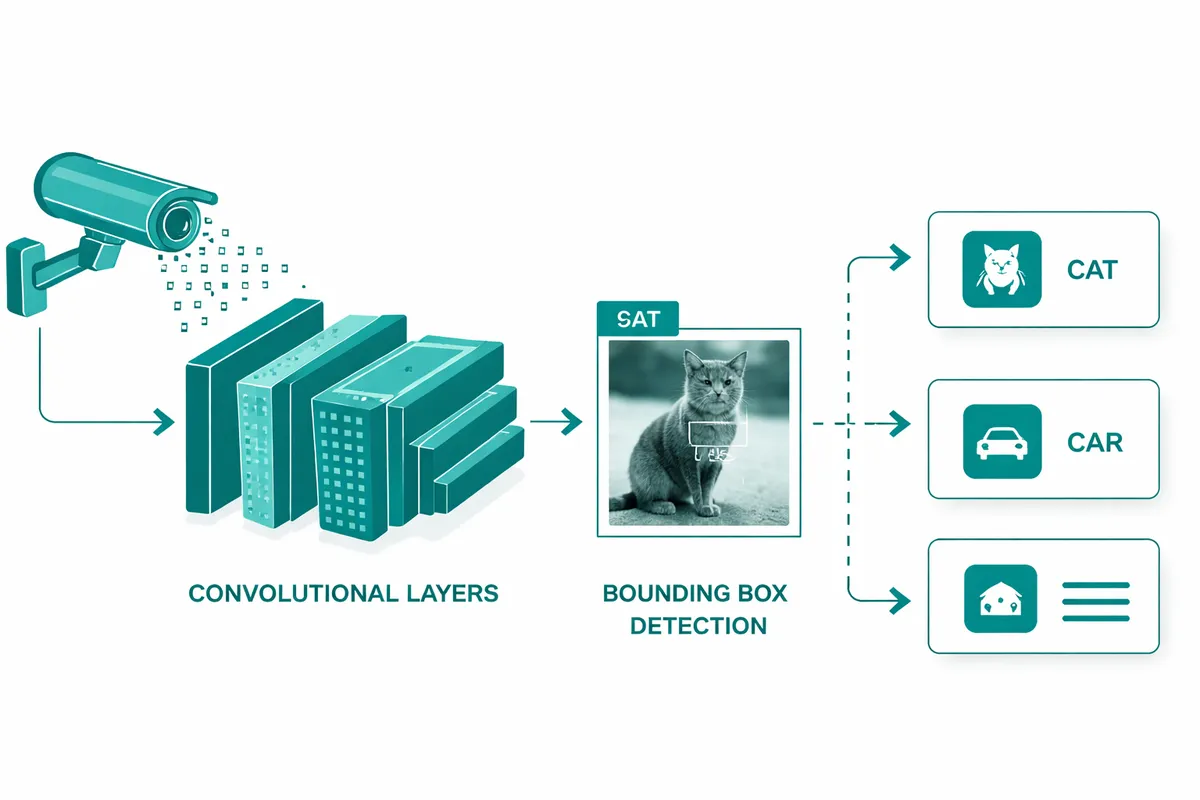
For each problem, we develop a computer vision system trained on relevant images. For auto shop diagnostics, we gather images of healthy engines, engines with common problems, and engines with unusual problems. We train the system to recognize visual patterns that indicate specific problems. The system learns what "clogged fuel filter" looks like, what "oil leak" looks like, what "blown head gasket" looks like. When the mechanic photographs an engine, the system identifies visible problems and suggests diagnostic steps.
For produce quality, we gather images of fresh produce, produce with minor quality issues, and spoiled produce. We train the system to recognize visual signals of freshness: color, firmness, visible damage. When produce arrives at the grocer, the produce manager photographs the items and the system scores freshness quality. Items below quality threshold are flagged for return.
For delivery receiving, we set up the system to photograph delivered items, count the items, identify product types, and detect packaging damage. The system generates a delivery receipt showing what was received, quantity, condition, and any quality issues. The restaurant manager confirms receipt with one photo instead of manually checking items off a list.
We also develop dashboards and reporting for computer vision analysis. An auto shop reviews computer vision diagnostics in the context of customer symptoms and test results. A grocer reviews produce quality scores and trends over time. A restaurant reviews delivery contents and trends over time. The system augments human judgment; it does not replace it.
Industries We Serve in Albany Park
Auto repair and diagnostic shops use computer vision to analyze engine and component photos for visible problems, accelerating diagnostics and improving accuracy. The mechanic can provide faster and more confident diagnoses to customers.
Produce grocers use computer vision to verify quality of incoming produce and mark spoiled items, reducing waste and maintaining customer satisfaction. Produce quality is consistent across all produce inspected.
Restaurants and food services use computer vision to automate delivery receiving, count items, and flag quality issues. Delivery processing becomes faster and more accurate.
Electronics repair shops use computer vision to diagnose problems with circuit boards, screens, and components, accelerating diagnostics and improving accuracy.
Apparel and retail stores use computer vision to inventory products, detect damage, and manage stock levels. Inventory becomes more accurate with less manual counting.
Medical clinics use computer vision for basic image analysis tasks like detecting skin conditions from photos, supporting physician diagnoses.
Food manufacturers and processors use computer vision for quality control, detecting packaging defects, and verifying product appearance meets standards.
What to Expect Working With Us
1. Problem identification and data collection. We identify the specific visual analysis problem you want computer vision to solve. We collect images of normal and problem scenarios. We establish quality standards and outcome labels for the training data.
2. Computer vision model training. We train a computer vision model on your images, teaching it to recognize the patterns and problems specific to your business. We validate the model's accuracy on images it has not seen before.
3. System integration and deployment. We integrate the computer vision system into your workflows so staff can use it naturally. A mechanic photographs an engine and gets instant analysis. A produce manager photographs items and gets quality scores. A restaurant manager photographs a delivery and gets an automated receipt.
4. Staff training and adoption. We train your staff on how to use the computer vision system, how to photograph items for analysis, and how to interpret results. Staff learn to use computer vision as a tool that augments their expertise.
5. Performance monitoring and improvement. We monitor the computer vision system's accuracy, identify situations where improvement is needed, and refine the model over time. As the system processes more real-world images, it learns and improves.
6. Integration with your business systems. We integrate computer vision results with your existing systems: diagnostic records for auto shops, quality management systems for grocers, delivery receipts for restaurants.