AI Strategy for Albany Park's Key Sectors
Immigrant-owned small businesses across the Lawrence and Kedzie corridor face a common strategic challenge: they have enough data to benefit from AI but not enough staff time to manage an AI implementation alongside daily operations. The right AI strategy for these businesses starts with a single, high-impact use case that reduces daily friction immediately, generates visible return quickly, and builds staff familiarity with AI tools that makes the next adoption easier. For most small businesses, that starting point is AI customer communication.
Community health organizations serving Albany Park's uninsured and underinsured populations face a different strategic equation. The mission is to serve as many patients as possible with the highest possible quality of care and the resources available. AI strategy in health settings focuses on reducing administrative burden on clinical staff, improving patient communication in multiple languages, and using data to identify service gaps and unmet need in the community. The strategic sequencing for health organizations typically prioritizes patient communication automation first, then clinical documentation support, then population health analytics.
Legal and social services organizations on Lawrence Avenue handle case volumes that make administrative overhead genuinely unsustainable at their current resource levels. AI strategy for these organizations focuses on identifying every administrative task that does not require legal or clinical judgment and systematically automating it. Intake forms, document collection, deadline tracking, status communications, billing, and grant reporting are all candidates for AI automation. The strategy builds an automation roadmap that frees professional staff for the work only they can do.
Nonprofits and community organizations including Albany Park Community Center and Communities United need AI strategies that account for their specific funding constraints and community accountability obligations. AI investments must be justifiable to funders, must not compromise the community relationships that make the organization effective, and must improve measurable program outcomes rather than just reducing staff workload. The right AI strategy for a community organization connects technology investment directly to mission achievement and frames it in language that resonates with funders.
Larger Albany Park institutions like Northeastern Illinois University nearby and Swedish Covenant Hospital have more organizational capacity for AI adoption but also face more complex organizational change management challenges. AI strategy for these institutions involves stakeholder alignment across departments, governance frameworks for AI use, and phased implementation plans that manage risk while delivering value at meaningful scale.
How Our AI Strategy Consulting Works
Engagement kick-off and discovery. We spend the first week understanding your organization from the inside. Interviews with leadership and frontline staff. Review of current technology systems and data assets. Analysis of operational pain points and strategic priorities. We are not looking for answers in this phase. We are building the understanding necessary to give you honest, specific recommendations.
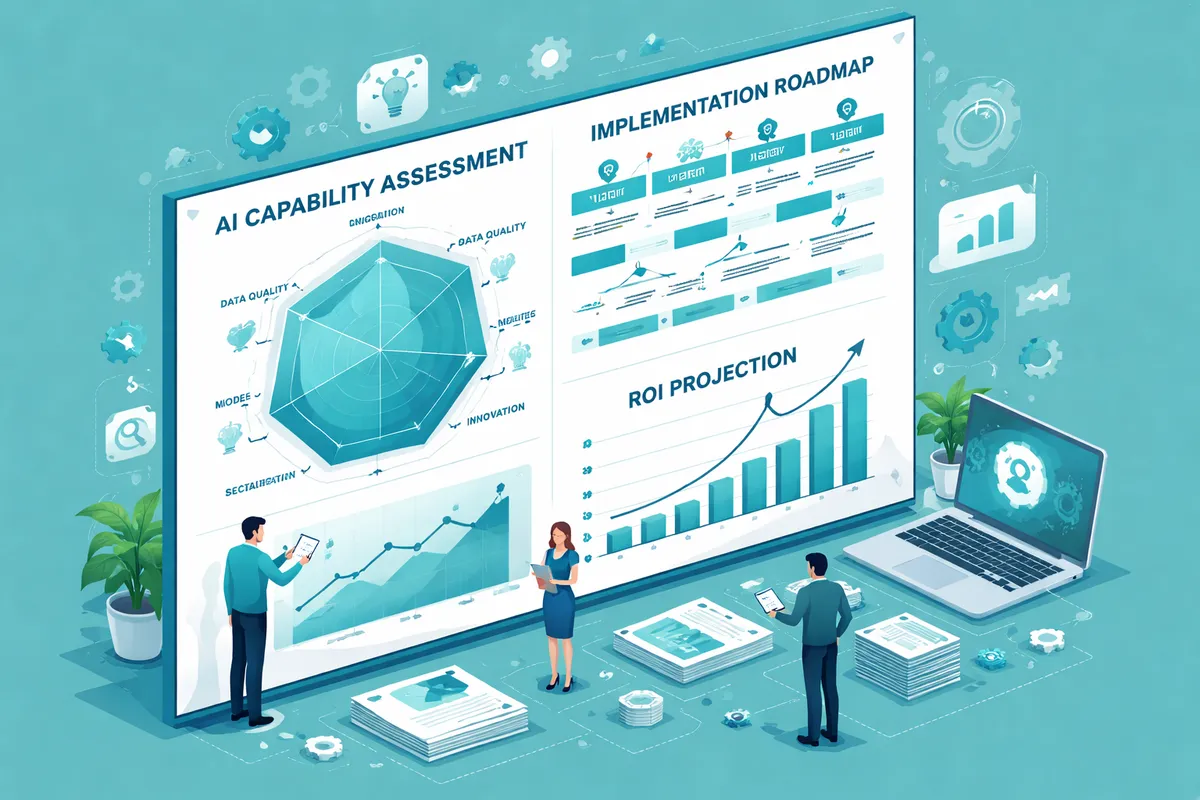
AI opportunity assessment. Based on discovery, we produce a structured analysis of AI opportunities in your organization, ranked by impact potential, implementation complexity, and cost. Each opportunity includes a realistic description of what it would take to implement, what it would cost, and what measurable outcome it should produce. We are explicit about which opportunities are high-confidence and which carry more uncertainty.
Roadmap development. We sequence the AI opportunities into a phased roadmap. Phase one typically includes the highest-impact, lowest-complexity opportunities that build confidence and deliver quick return. Phase two builds on that foundation. Phase three covers the more complex, higher-stakes investments that require organizational readiness developed in phases one and two.
Business case documentation. For organizations that need to present AI investment proposals to boards, funders, or leadership teams, we provide the documentation to support those conversations. Projected ROI, implementation timeline, risk assessment, and connection to strategic priorities.
Implementation planning. For organizations ready to move from strategy to action, we build detailed implementation plans for phase one. This includes vendor selection, project management framework, staff training plan, and success metrics that can be tracked from day one.