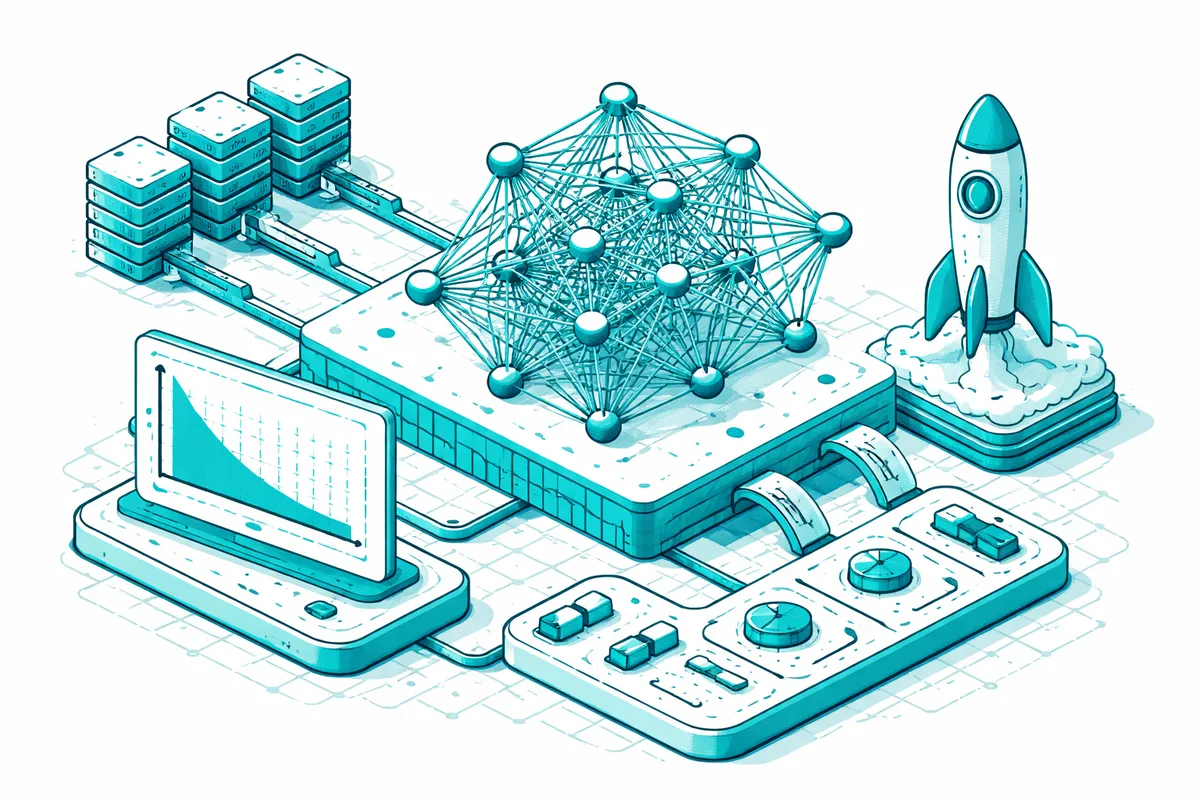
How We Build AI Model Training for Albany Park
Our process begins by identifying what data the business already has that can be used for training. We start with an on-site meeting at the business: a law office on Kedzie Avenue, a clinic near Eugene Field Park, an auto shop on Foster Avenue. An immigration attorney provides access to case files, case outcomes, and the attorney's case notes. We anonymize sensitive client information while preserving the legal case details and outcomes. A medical clinic provides access to de-identified patient records, treatment notes, and patient outcomes. We remove all patient identifiers while preserving the clinical information. A restaurant provides transaction data, customer profiles, and menu performance data.
We evaluate the quality and quantity of available data. To train an effective model, we typically need hundreds of examples in the domain. For an immigration firm, that means hundreds of similar visa cases with documented outcomes. For a medical clinic, that means hundreds of patient cases with treatment and outcomes information. For a restaurant, that means thousands of transaction records or customer interactions. If the business does not have sufficient data, we can supplement with publicly available data in the same domain (published immigration case decisions, medical literature, etc.) to train the initial model, then fine-tune with the business's proprietary data.
We then prepare the data for training. We anonymize sensitive information and structure the data for learning. For an immigration case: visa category, required documents, situation, timeline, outcome. For medical cases: health conditions, symptoms, treatments, outcome. For restaurant data: dish category, price, customer reviews, sales volume.
We then fine-tune the AI model on the business's data. Fine-tuning teaches the model to apply its general knowledge of language and reasoning to the specific patterns and terminology in the business's domain. The model learns that in this business, "adjustment of status" is a specific concept with specific requirements. The model learns that in this medical practice, certain symptom combinations typically lead to specific diagnoses. The model learns that in this restaurant, certain flavor profiles and price points drive customer satisfaction.
We validate the trained model on cases it has never seen. We test whether the model's immigration case analysis aligns with the attorney's judgment, whether clinical summaries align with physician notes, and whether product recommendations match customer preferences. If accuracy falls short, we identify what additional training data or tuning is needed.
Once validated, we deploy the custom model into the business's workflows. The attorney can now feed new cases to the model and receive analysis informed by the firm's years of experience. The clinic can feed patient notes to the model and receive clinical summaries informed by the clinic's treatment protocols. The restaurant can feed customer data to the model and receive personalized recommendations informed by the restaurant's customer patterns.
Industries We Serve in Albany Park
Immigration law offices fine-tune models on their case files, visa approval data, and case outcomes. The resulting model understands the specific visa categories the firm focuses on, the typical timelines, the documents required, and the patterns that indicate visa approval likelihood. Case analysis becomes faster and more accurate.
Medical clinics fine-tune models on their patient records and treatment notes. The resulting model understands the specific health conditions common in the clinic's patient population, the treatment protocols used by the clinic's physicians, and effective communication for the clinic's demographics. Patient care becomes more informed and patient communication becomes more culturally appropriate.
Financial service providers fine-tune models on their customer transaction data and service records. The resulting model understands the specific financial products, typical customer situations, and financial outcomes. Customer service and product recommendations become more accurate.
Auto repair shops fine-tune models on their repair history, vehicle types served, and customer satisfaction data. The resulting model understands the specific vehicles commonly serviced, typical repair patterns, and effective customer communication. Repair estimates and customer communication become more accurate.
Restaurants and food businesses fine-tune models on their menu data, customer transaction data, and customer feedback. The resulting model understands the specific dishes, customer preferences, and flavor combinations that drive satisfaction. Menu recommendations and customer communication become more effective.
Accounting services fine-tune models on client financial data and tax outcomes. The resulting model understands the specific tax situations and business types served. Tax planning and financial advice become more informed and specific to each client.
What to Expect Working With Us
1. Data inventory and assessment. We identify what training data is available and assess whether quantity and quality are sufficient. We determine what additional data sources might help improve the model.
2. Data preparation and anonymization. We extract relevant data from your business systems, anonymize sensitive information while preserving learning signals, and structure the data for model training. This typically takes two to four weeks depending on data accessibility and volume.
3. Model training and validation. We fine-tune an AI model on your business data. We validate the model's accuracy by testing it on new cases it has not seen before. We compare the model's output to human expertise to ensure quality. We iterate on the model to improve accuracy if needed.
4. Integration and deployment. We integrate the custom model into your existing workflows so staff can use it naturally. The attorney can feed cases to the model without leaving the case management system. The clinic can request patient summaries without leaving the patient record system.
5. Performance monitoring and retraining. Over time, as your business generates new data, the model can be retrained to incorporate new patterns and improve accuracy. We monitor model performance, identify areas where accuracy is declining or needs improvement, and schedule periodic retraining.