How We Build AI Customer Service for Albany Park
We start every Albany Park engagement with an audit of your current customer communication. We pull data from every channel where your customers reach you: phone, website, email, text messages, social media, Google Business messages, and if applicable, in-app messaging. We map inquiry types by frequency and complexity. A typical Albany Park small business might find that 35% of their inquiries are about hours and location, 25% are about specific products or services, 20% are appointment or order-related, and 20% are a mix of complaints, referrals, and miscellaneous questions. Each category gets its own resolution framework.
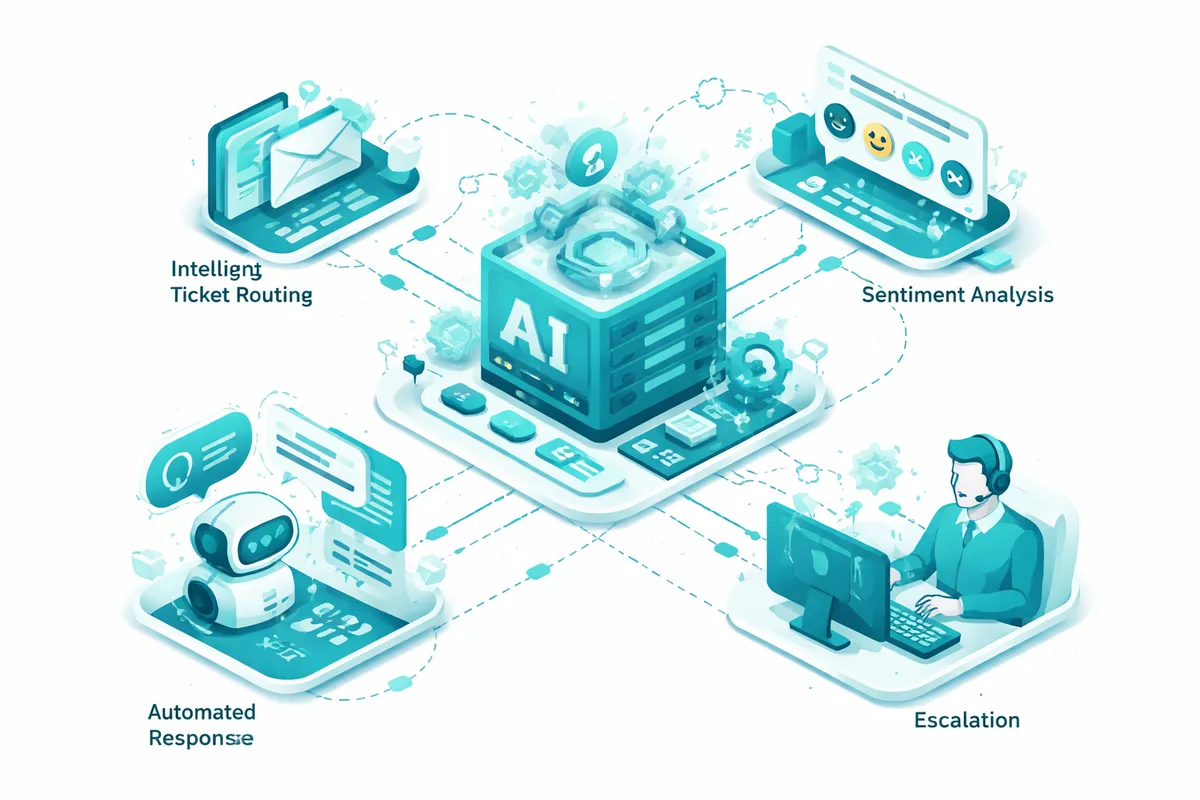
We then build your AI in three functional layers.
The first layer handles immediate resolution. Questions about hours, location, current specials, product availability, appointment openings, and pricing. This layer is active 24 hours a day. A customer can message your business from a mobile phone at 10 PM after leaving the Brown Line at Kimball and get an accurate answer about whether your store will be open by the time they walk over. No voicemail. No waiting until morning.
The second layer handles guided interactions. These are the conversations that require the AI to collect information before it can resolve something. An appointment booking requires name, date preference, and reason for visit. A catering inquiry for a restaurant requires headcount, event date, dietary restrictions, and budget. The AI gathers this information through a natural conversation in the customer's preferred language and either books the appointment or routes the collected information to the appropriate staff member.
The third layer handles intelligent escalation. Complaints, high-value requests, or anything the AI determines requires human judgment gets escalated immediately with full conversation context. The staff member picking up the escalation sees the entire interaction history, the customer's language preference, and a summary of the issue so they can respond without asking the customer to start over.
Industries We Serve in Albany Park
Restaurants and food businesses along Lawrence Avenue and Kedzie Avenue handle a constant volume of inquiries about hours, menus, catering options, delivery availability, and dietary accommodations. An AI customer service system handles those inquiries across every channel simultaneously, in multiple languages, without pulling kitchen or counter staff away from their primary work. A Korean BBQ restaurant on Kedzie can have the AI handle all table reservation confirmations, menu questions, and takeout order status while the kitchen focuses on the food.
Community health centers serving Albany Park's uninsured and underinsured populations benefit significantly from AI customer service. Appointment scheduling, insurance eligibility questions, prescription refill requests, and referral coordination are all high-volume, rule-based interactions that AI handles accurately. For a clinic serving patients who speak Korean, Arabic, Spanish, and English, multilingual AI support reduces the need for bilingual staff to serve as interpreters during routine administrative interactions.
Retail and grocery businesses on Pulaski and Montrose use AI to handle product availability inquiries, store hours, special order requests, and loyalty program questions. For an ethnic grocery serving a specific immigrant community, the AI can be trained on the full product inventory and answer highly specific questions about brands, ingredients, and sourcing that would otherwise require a knowledgeable staff member to field.
Immigration and legal services offices on Lawrence Avenue receive a high volume of highly repetitive initial inquiries about services, eligibility, appointment availability, and document requirements. AI handles the initial information-gathering phase, answers frequently asked questions about processes and timelines, and schedules consultations, all while maintaining the sensitivity required for clients navigating complex and stressful legal situations.
Auto repair shops and service businesses scattered throughout the residential streets handle scheduling requests, service quotes, parts availability questions, and follow-up on vehicles in service. AI manages those communications so the mechanics can stay in the shop rather than on the phone.
What to Expect Working with Running Start Digital
Week one and two: audit and strategy. We review your current customer communication data, categorize inquiry types, identify language distribution, and map resolution paths. We build a complete picture of what your customers ask and how your team currently handles it.
Week three and four: build and training. We build your AI customer service system using your actual business data. Menus, inventory, service descriptions, policies, pricing, FAQs, and past customer conversations all train the AI to respond accurately from day one. We configure multilingual capability for the specific languages your customers use.
Launch: channel integration. We deploy the AI across your website, Google Business messages, SMS, and any social media channels where your customers reach you. All channels connect to a single system. The AI maintains context across channels so a customer who messages you on Instagram and then sends a text gets a consistent, continuous experience.
Ongoing: monitoring and refinement. We track resolution rates, escalation frequency, and accuracy across languages. Weekly refinements improve the system as it encounters new inquiry types. Monthly reports show you exactly how many interactions the AI handled and resolved.