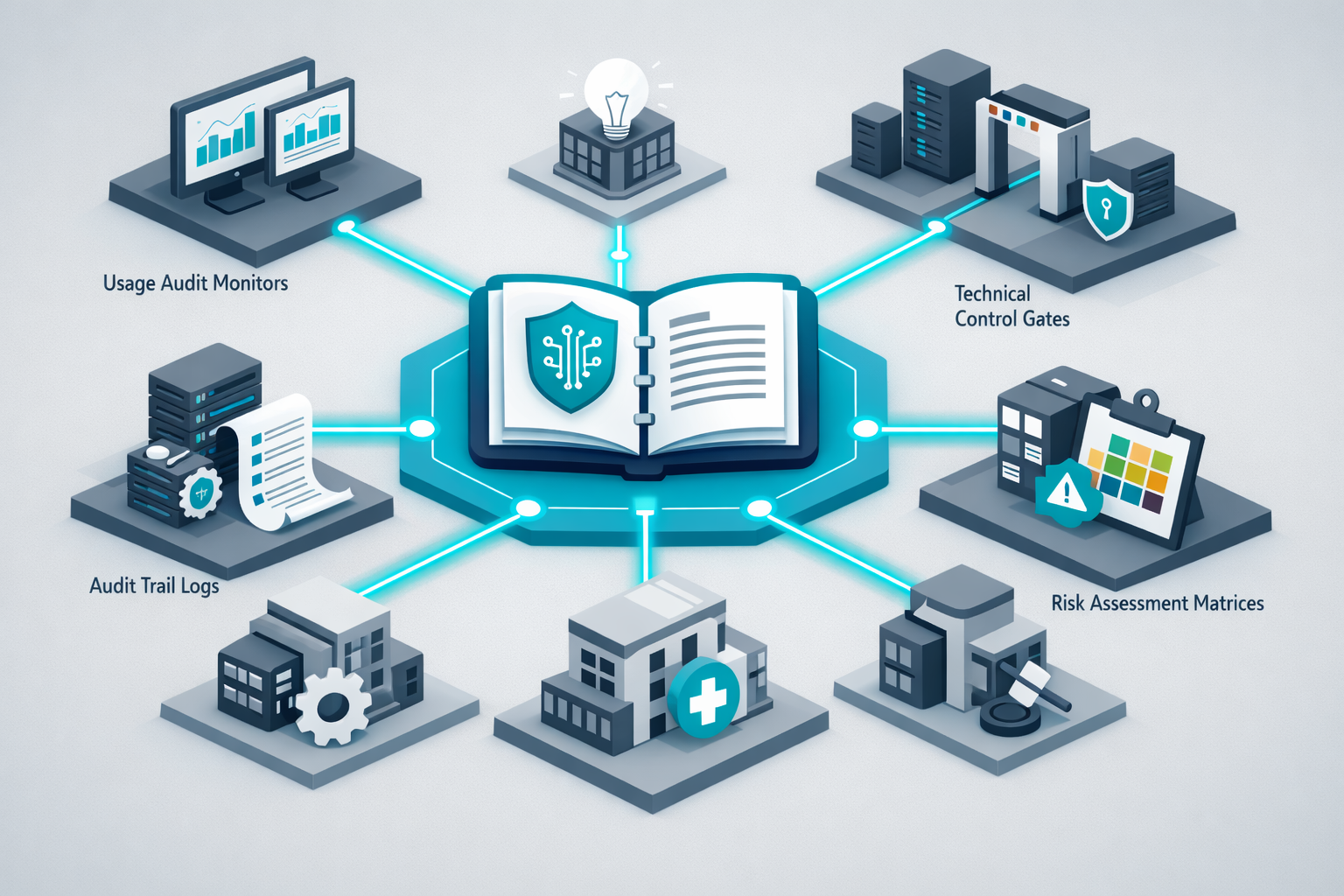
How We Build AI Compliance & Governance for Albany Park
Our process begins with an audit of the business's current AI adoption and data handling practices. What AI tools are in use? What data flows into those tools? What are the regulatory requirements for this business and industry? For a medical clinic, this means mapping patient data flows, identifying which data requires HIPAA protection, and assessing current AI tools. For an immigration law office, this means identifying sensitive case files and understanding attorney-client privilege requirements. For a restaurant, this means understanding customer data collection, payment data handling, and regulatory requirements.
From that audit, we develop a comprehensive AI governance framework tailored to the business's regulatory context, size, and risk tolerance. The framework includes:
Data classification and handling policies. We categorize the business's data into sensitivity tiers: public data, internal data, customer personal information, and sensitive regulated data. For each tier, we specify how data can be used, where it can be stored, who can access it, and how long it should be retained.
AI tool assessment and approval process. We evaluate each AI tool against regulatory requirements and security standards. For a medical clinic considering AI for patient intake, we check if the tool has a Business Associate Agreement for HIPAA compliance. For an immigration law office, we check if the tool has data processing agreements protecting attorney-client information. We document which tools are approved, which have data access restrictions, and which are prohibited.
Vendor management and contracts. We develop data processing agreements with AI tool vendors specifying how customer data will be handled, what security measures the vendor must maintain, what happens if there is a breach, and what happens to data if the vendor relationship ends.
Access control and authentication. We specify who in the organization can access what data. An immigration attorney can access case files. A receptionist can access scheduling and basic contact data but not case details. An auto shop owner can access vehicle histories but not full payment information. Access is controlled through role-based permissions and strong authentication.
Security and incident response. We develop security policies for data storage, transmission, and backup. We establish an incident response plan for how the business responds if data is exposed, if an AI tool malfunctions, or if a vendor experiences a breach.
Training and awareness. We develop training materials for staff covering data governance policies, proper handling of regulated data, and security awareness. A receptionist at a medical clinic learns what qualifies as Protected Health Information and how to avoid exposing patient data. An attorney's assistant learns which documents are protected by attorney-client privilege.
Compliance monitoring and audit. We establish quarterly audits to ensure the business remains compliant. We track which AI tools are being used with what data, verify that vendor agreements are in place, and review access logs to ensure only authorized personnel are accessing regulated data.
Industries We Serve in Albany Park
Medical and dental practices serving immigrant communities operate under HIPAA compliance requirements and often encounter challenges integrating AI tools while protecting patient data. We develop governance frameworks that identify which data requires protection, which AI tools are HIPAA-compliant, and how to structure workflows to prevent data exposure.
Immigration law offices handle extremely sensitive data: client immigration status, family relationships, financial information, and legal strategy. Attorney-client privilege and confidentiality obligations are non-negotiable. We develop governance frameworks that specify which data can flow into AI tools, which documents require special protection, and how to maintain privilege while using AI for research and document organization.
Financial service providers and currency exchange businesses handle customer funds and personal financial information. Regulatory requirements around money transmission, consumer privacy, and fair lending are stringent. We develop governance frameworks ensuring compliance while enabling AI for fraud detection and operational efficiency.
Medical clinics and community health centers serving immigrant populations often lack resources for compliance infrastructure. We develop lightweight governance frameworks that provide protection without creating bureaucratic overhead that interferes with care delivery.
Restaurant chains and food service operations increasingly use AI for inventory, pricing, and customer analytics. We develop frameworks that enable these operational benefits while protecting customer data and complying with consumer privacy standards.
Auto repair and diagnostic service providers integrating AI-powered diagnostic equipment need to understand what data the equipment collects and what customer information it records. We develop frameworks governing equipment data practices and customer privacy.
What to Expect Working With Us
1. Comprehensive AI and data audit. We conduct a detailed audit of your current operations, identifying all AI tools in use, all data flows, and regulatory requirements for your business. We map where data risks and compliance gaps exist. We produce a written audit report with findings and recommendations.
2. Governance framework development. We develop a comprehensive AI governance framework tailored to your business size, industry, and regulatory context. The framework includes data classification policies, AI tool assessment criteria, vendor management requirements, access control policies, security requirements, and incident response procedures.
3. Implementation support and training. We work with your team to implement the governance framework, establish new processes, and train staff on data handling policies. We help you establish vendor agreements with AI tools you are using. We conduct training sessions covering each staff member's specific data responsibilities.
4. Ongoing monitoring and compliance. We establish quarterly compliance monitoring and audits to ensure you remain compliant as your business evolves and as new AI tools emerge. We track regulatory changes relevant to your industry and alert you to new compliance obligations. We conduct annual compliance reviews and recommend framework updates based on changes in your operations or regulatory environment.