How We Build Accounting Automation for Albany Park
We begin by spending time in your business, not on a video call. For a grocery on Lawrence Avenue, that means understanding your POS system, your supplier invoicing cycle, and how you currently handle the gap between cash and card sales at reconciliation. For a restaurant near Ronan Park, it means tracing the path from a server entering an order to the revenue showing up in your general ledger, and identifying every manual step in between.
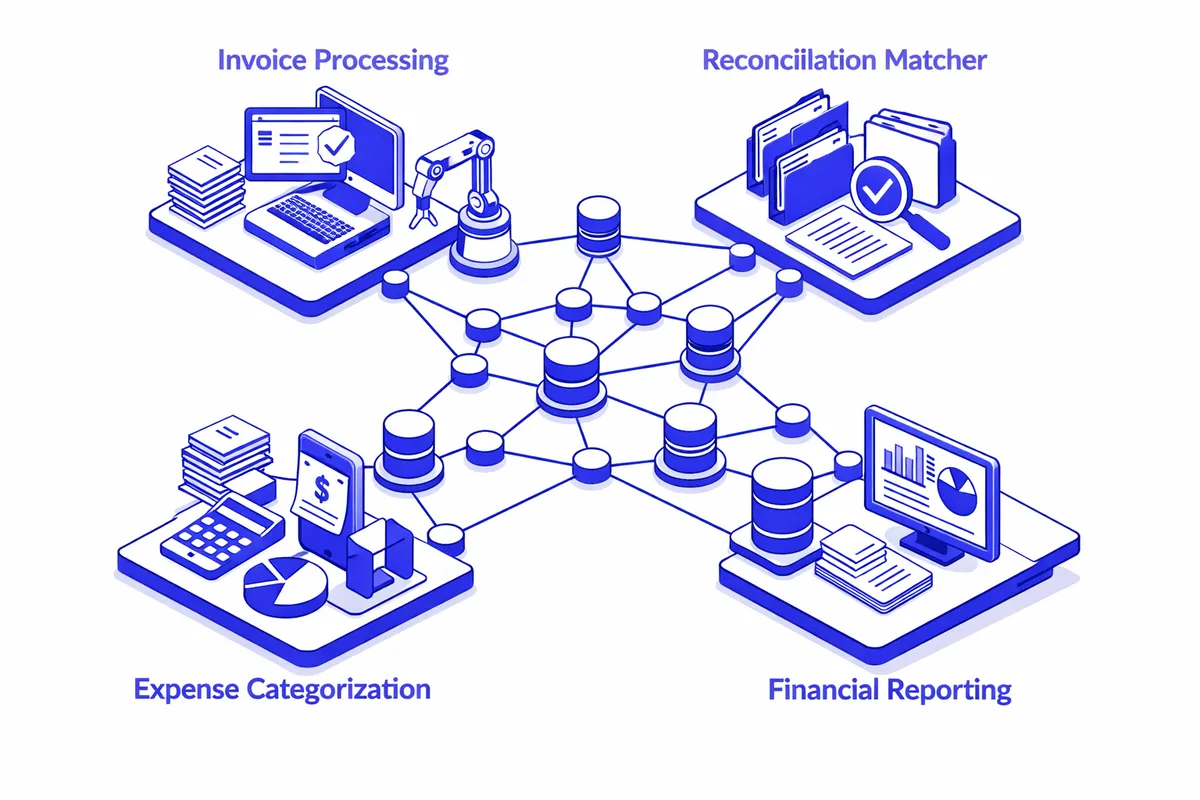
From that walkthrough, we build a prioritized list of automation candidates. For most Albany Park small businesses, the highest-value automations are bank feed reconciliation, vendor invoice processing, payroll journal entries, and sales tax calculation. These are tasks that follow fixed rules, require no judgment, and currently consume the most unbillable staff time.
We then connect your existing tools. Most small businesses in Albany Park are using QuickBooks, a POS system with an export function, and a payroll provider. We build the automations on top of what you already have rather than forcing a platform migration. The automation layer pulls data from your POS nightly, reconciles it against your bank feed, categorizes transactions by the rules you set, and posts the entries to your general ledger without anyone touching a spreadsheet.
Testing uses three months of your actual historical data before we go live. You see the automated output next to what your manual process produced, verify the match, and only then do we switch to live transactions.
Industries We Serve in Albany Park
Korean grocery stores and importers along Lawrence Avenue use accounting automation to handle high-volume daily sales reconciliation, supplier invoice matching, and inventory cost tracking. When a store receives multiple supplier deliveries per week at fluctuating prices, manual cost-of-goods calculations are both time-consuming and error-prone. Automated invoice ingestion and matching against purchase orders ensures that margin reporting reflects actual costs, not last month's estimates.
Middle Eastern bakeries and restaurants near Kedzie Avenue and Kimball Avenue automate their daily cash reconciliation, food cost tracking, and tip and wage journal entries. These businesses often have separate wholesale and retail revenue streams that need to be tracked distinctly. Automated rules separate the revenue categories at the point of entry rather than requiring a bookkeeper to sort transactions after the fact.
Latino taquerias and family restaurants throughout the Albany Park corridor use accounting automation to handle catering invoice generation, split payment reconciliation, and payroll processing for hourly staff. The administrative burden of running payroll weekly for a mix of full-time and part-time employees is one of the most consistent pain points we encounter. Automated payroll journal entries eliminate a half-day of manual posting every pay period.
Immigration law offices along Pulaski Road automate trust account reconciliation, client retainer tracking, and invoice generation. Illinois bar rules require specific three-way reconciliation procedures for trust accounts. We build those reconciliation steps directly into the automation workflow so that the output is always compliance-ready without requiring the attorney to run a separate manual check.
Auto repair shops on the Lawrence Avenue corridor automate parts inventory reconciliation, job costing, and vendor payment scheduling. When a shop has twenty open repair orders at any given time, each with its own parts cost, labor hours, and billing status, manual job costing produces the kind of inconsistency that makes it hard to know which types of repairs are actually profitable.
Small medical practices and clinics near Eugene Field Park and Albany Park Library automate insurance payment posting, patient billing reconciliation, and expense categorization. Medical billing involves multiple payers with different fee schedules and payment timelines. Automated payment posting matches explanation-of-benefits records against expected fees and flags any shortfall for follow-up without a staff member reviewing every remittance manually.
What to Expect Working With Us
1. On-site process review. We visit your location on Lawrence Avenue or Kedzie Avenue, walk through your current process with the person who handles the books, and document every manual step. We do not design automations from assumptions; we design them from what we actually observe.
2. Tool inventory before any builds. We catalog what software you already use and what data it produces before recommending anything new. Most Albany Park businesses have more automation potential in their existing tools than they realize, and we start there before suggesting any new subscriptions.
3. Phased rollout starting with your biggest pain. We do not try to automate everything at once. We identify the single process that takes the most time or causes the most errors, automate that first, and then expand once you have confidence in the system.
4. Ongoing exception review support. Every automation generates an exception report for transactions it cannot process according to its rules. We train your team to read those reports and handle exceptions efficiently, so the system gets smarter over time as edge cases get resolved and new rules get added.