Our UI/UX Design Work in Atlanta
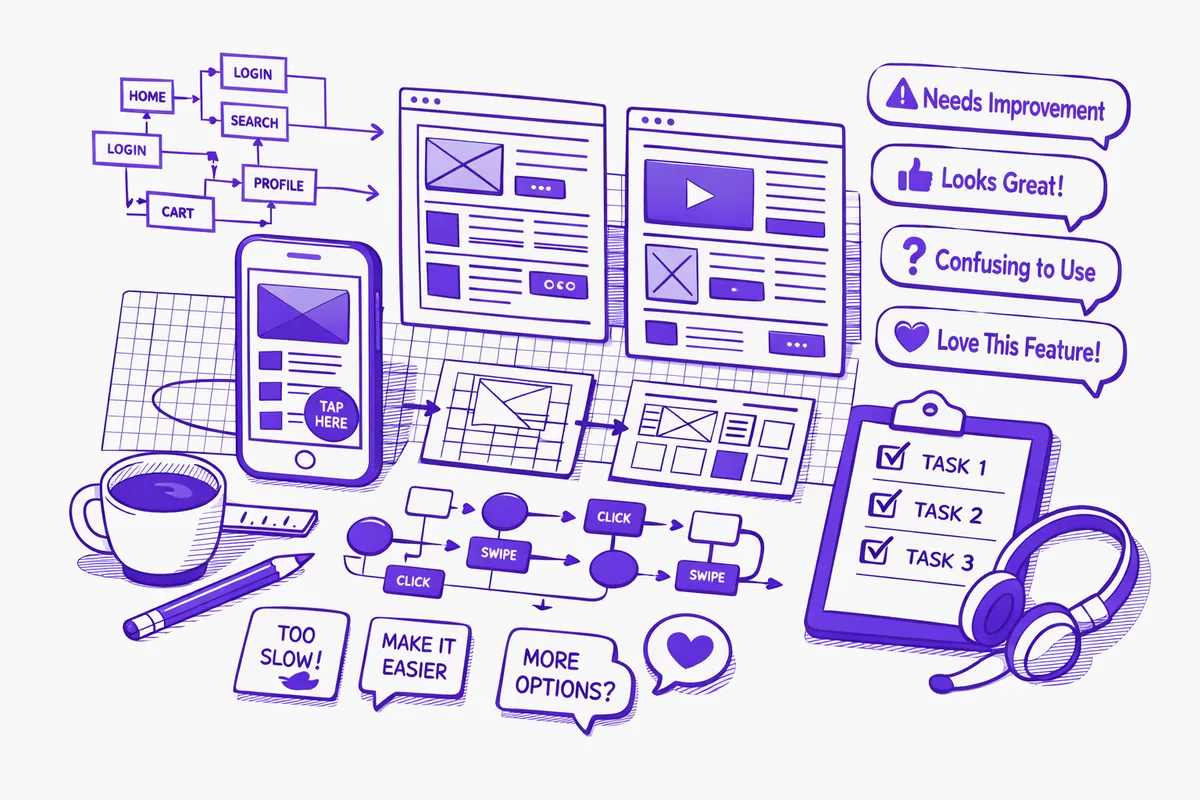
- User research: stakeholder interviews, contextual inquiry, usability testing, and survey research with real Atlanta users in healthcare, fintech, and technology contexts
- User journey mapping and pain point analysis across the complete user lifecycle
- Information architecture and navigation design grounded in how users actually organize and search for information
- Wireframing and low-fidelity prototyping validated with user feedback before high-fidelity work begins
- High-fidelity interface design and interactive prototypes that clients and stakeholders can evaluate realistically
- Mobile app design for iOS and Android calibrated to how Atlanta users interact with applications on each platform
- Web application and SaaS product design with subscription and enterprise UX considerations
- Design systems and component libraries for growing Atlanta product teams that need to ship consistently
- Accessibility design meeting WCAG 2.1 AA standards for applications serving Atlanta's diverse population
- Healthcare UX with HIPAA compliance context for applications serving Atlanta's health systems
- Developer handoff specifications using Figma with the documentation that Atlanta engineering teams need to implement designs accurately
Industries We Serve in Atlanta
Healthcare and Medical Technology. The Emory, Piedmont, Northside, Children's Healthcare of Atlanta, and WellStar patient communities represent millions of Atlantans interacting with healthcare applications. Clinical staff at these institutions evaluate software against workflow realities that only emerge from genuine research. We design healthcare applications with the compliance context, clinical workflow knowledge, and patient experience expertise that Atlanta's healthcare technology market demands.
Fintech and Financial Services. Atlanta's fintech ecosystem, anchored by NCR, Global Payments, Equifax, and hundreds of startups, creates a sophisticated buyer market for financial technology applications. We design fintech UX that balances the complexity of financial data with the accessibility that drives user adoption.
Enterprise Software and SaaS Products. Atlanta Tech Village and ATDC companies building B2B SaaS products for Atlanta's corporate market need design that passes the enterprise evaluation standards that Delta, Home Depot, Cox Enterprises, and other major Atlanta employers apply to software vendor assessments.
Logistics and Supply Chain Technology. Atlanta's logistics technology sector, serving the Southeast distribution networks anchored by Hartsfield-Jackson and the Port of Savannah, needs supply chain application interfaces designed for operational users under time pressure.
Entertainment and Media Production. Atlanta's film and television production industry, producing more content than almost any city in the world, needs production management tools designed by people who understand how productions actually operate rather than how they appear from the outside.
Real Estate and Property Technology. Atlanta's active real estate market generates demand for property technology tools across the transaction lifecycle. We design applications for agents, developers, and investors who need efficiency and clarity in high-stakes, time-sensitive decisions.
What to Expect
Phase 1: Discovery and Research (Weeks 1 to 3). We conduct user interviews, review any existing usage data, map the competitive landscape, and produce a research synthesis that frames the design opportunity. For Atlanta healthcare and enterprise applications, this phase includes stakeholder interviews with clinical or operational users who represent the actual use environment.
Phase 2: Information Architecture and Wireframing (Weeks 3 to 6). We translate research into information architecture and user flow maps, then build wireframes for the primary user journeys. Wireframes are reviewed and validated with stakeholder feedback before high-fidelity work begins.
Phase 3: High-Fidelity Design (Weeks 6 to 12). We produce high-fidelity interface designs and interactive prototypes for primary flows. Usability testing with representative users validates designs before developer handoff. Design systems are built to support ongoing product development.
Phase 4: Developer Handoff and Support. We produce comprehensive Figma specifications with component documentation, interaction notes, and the edge case guidance that prevents implementation gaps. We are available during development to answer questions and review implementation quality.