Our API Development Work in Atlanta
- RESTful API architecture and development for web applications, mobile clients, and third-party partner integrations
- GraphQL API development for complex data relationships and applications requiring flexible client-driven queries
- Healthcare interoperability APIs including HL7 FHIR R4 implementation, CCD document exchange, and custom healthcare data APIs compliant with HIPAA and ONC interoperability requirements
- Fintech and payments APIs for Atlanta-area financial services companies: payment processing integration, ACH connectivity, identity verification, and regulatory reporting endpoints
- Logistics and supply chain tracking APIs supporting real-time shipment visibility, carrier integration, and dispatch coordination for Atlanta's freight and logistics sector
- Real estate data and MLS integration APIs connecting Atlanta property platforms to Georgia MLS feeds, mortgage rate APIs, and neighborhood data services
- Manufacturing and ERP integration APIs bridging enterprise systems with modern cloud applications for Atlanta industrial companies
- Developer platform APIs with API key management, rate limiting, usage metering, and full developer documentation portals
- IoT and operational technology APIs for manufacturing and logistics clients connecting physical systems to data infrastructure
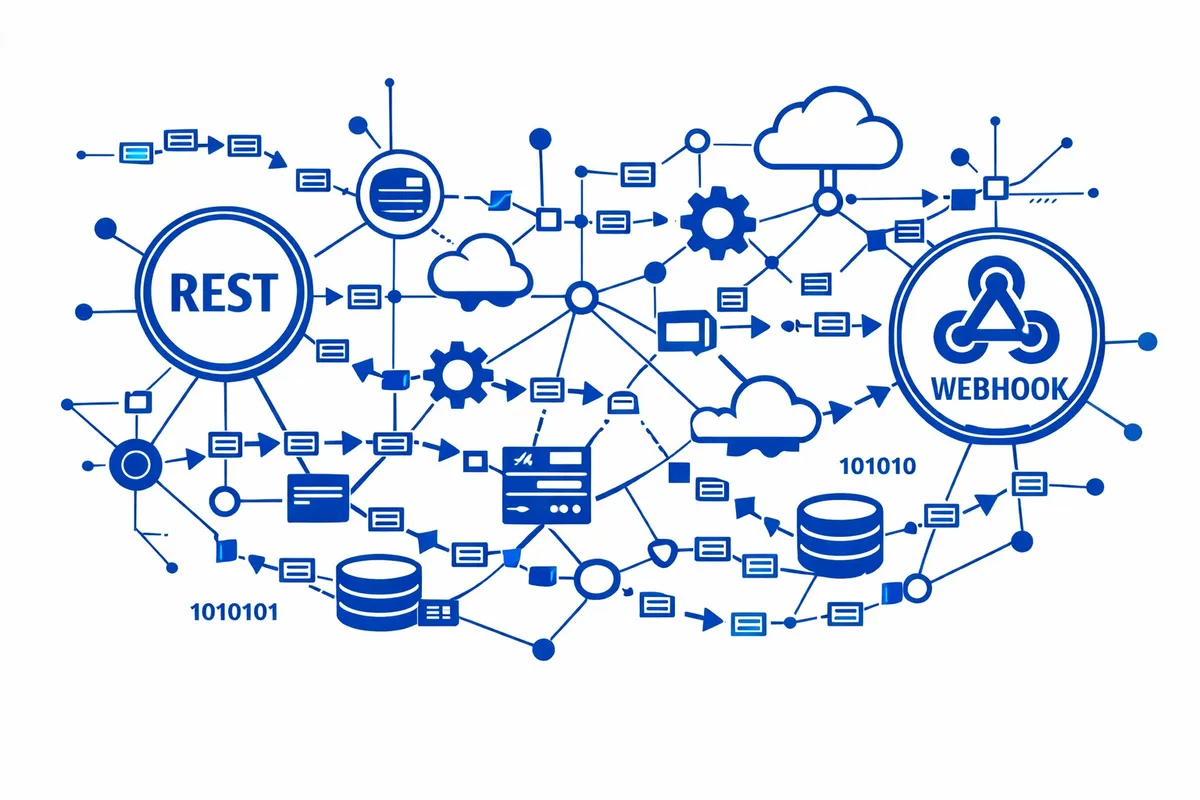
- Webhook and event-driven architecture for real-time asynchronous system communication
- Legacy API modernization and SOAP-to-REST migration for established Atlanta enterprises with aging integration infrastructure
- Internal microservices API design for companies transitioning from monolithic to distributed architectures
Industries We Serve in Atlanta
Healthcare and Life Sciences Atlanta's healthcare ecosystem is one of the largest in the Southeast. Emory Healthcare, Piedmont Healthcare, Northside Hospital, Children's Healthcare of Atlanta, and the Grady Memorial system collectively manage one of the region's most complex health information environments. API development for healthcare requires HIPAA compliance as an architectural foundation: encryption at rest and in transit, access controls with audit logging, minimum necessary data principles, and BAA-compliant data handling. We have built HL7 FHIR-compliant APIs for healthcare data exchange, custom clinical decision support APIs, and patient engagement platform integrations for Atlanta healthcare organizations. Compliance is a design requirement from the first architecture diagram, not a compliance review at the end of development.
Fintech and Financial Services Atlanta's Midtown corridor has become one of the Southeast's strongest fintech ecosystems, with payments infrastructure companies, lending technology firms, wealth management platforms, and the next generation of banking technology companies all building here. Fintech API development requires security architecture that meets regulatory standards: OAuth 2.0, mutual TLS, request signing, comprehensive audit logging, and data handling that satisfies applicable financial services regulations. We build financial services APIs designed for the throughput, latency, and reliability requirements of production financial applications, not just the functional requirements.
Logistics and Supply Chain Technology Hartsfield-Jackson Atlanta International Airport is the busiest cargo airport in the Southeast, anchoring a logistics and supply chain ecosystem that extends across the region. Logistics API development for Atlanta companies typically involves carrier integration for real-time tracking data, warehouse management system connectivity, final-mile delivery coordination, and customer-facing shipment visibility. These APIs must handle the real-time data volumes and reliability requirements of active logistics operations, where API downtime translates directly to operational disruption and customer service failures.
Real Estate and Property Technology Atlanta's residential and commercial real estate market, among the most active in the Southeast, has generated a generation of property technology companies building platforms that require sophisticated API integration. MLS data feeds, property valuation APIs, mortgage product APIs, and neighborhood data services all need to be integrated into a consistent, performant API layer for the applications that serve Georgia's real estate professionals and consumers. We build real estate APIs that handle the data volume and freshness requirements of an active market.
B2B Software and SaaS Companies The companies emerging from ATDC, Atlanta Tech Village, and Tech Square are building B2B software products that require enterprise-grade API architecture to sell into large organizations. Enterprise buyers evaluate API quality as a procurement criterion. An API that is well-designed, thoroughly documented, and reliably available is a competitive differentiator in enterprise sales. We build APIs for Atlanta SaaS companies that accelerate their enterprise sales motion rather than creating objections in it.
Media, Film, and Entertainment Technology Georgia's film and entertainment industry, anchored by productions in Atlanta and the growing entertainment technology sector around it, has created demand for content management and distribution APIs that serve media workflows. We build APIs for entertainment technology companies serving Atlanta's production community and the national media market they connect to.
What to Expect
Architecture and Design Every API engagement begins with architecture design before any code is written. We map your integration requirements, design the data model and endpoint structure, define security architecture, plan versioning strategy, and document the design in an API specification that serves as the contract for development. You review and approve the design before implementation begins.
Development and Testing We build iteratively with working, testable endpoints at each milestone. You can begin integration testing early in the development process, which surfaces any misalignments between the design and your actual requirements before they are expensive to fix. Every endpoint includes unit tests and integration tests before delivery.
Documentation and Handoff Every API we deliver includes interactive documentation generated from the OpenAPI specification, authentication and authorization guides, code examples in commonly used languages, error code references, and a sandbox environment. Architecture documentation for your internal team is included. For Atlanta companies that want to own the codebase, knowledge transfer is part of the engagement.
Post-Launch Support We implement comprehensive logging, monitoring, and alerting as part of every API build. Post-launch support and maintenance retainers cover performance monitoring, security updates, and planned feature additions.